“The citizen has become a consumer; and when the consumer is no longer profitable, he is cast away and left out of society”
Consumidores y excluidos, Ignacio Lewkowicz, 2004
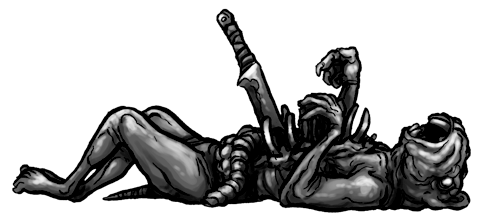
At the beginning of the 21st century, economic crises, caused by the scarcity of water and fossil fuels and the ruthless speculation of the big economic powers, began to follow one after the other. Although at first the population was confident that things would get better again, and gripped by the fear of being left with nothing, they bowed their heads and accepted measure after measure that was taking away all the rights they had gained over the years, the moment came when the general discontent was such that the spark of rebellion exploded.
At first they were a minority, but soon millions of citizens around the world took to the streets with nothing left to lose, targeting all the political and economic powers that had remained at the top of the pyramid as an untouchable oligarchy. There was war, slaughter, anarchy… entire countries were almost wiped out. The world was shattering.
Big corporations, governments and the upper class realised for the first time that the tame flock they had herded for centuries had gone wild, and that things would never be the same again.
Seeing that they could not afford years to reach agreements, they created a council to lead them and have the power to make immediate decisions, which they called the Compass. It decided that the problem was not the System, but that there were too many people in the System.
So they went on to do something completely new in order to maintain their status quo: the Babylon Project.

This is how the creation of the Megalopolises was planned: enormous, self-sufficient walled cities where only the right people would fit. Reality had to be rebuilt, but taking it one step further, making it in their own image. 5% of the population, enough to maintain the perfect societies of economy and consumption, full of luxury, waste, pure water and food.
The rest of the population, a burden and source of problems and conflicts, had to be left outside.
In total, the construction of more than twenty of these mega-cities was planned, spread all over the globe.
However, these huge cities had to be built, and this could not be done in secret, so the Babylon Project was presented as a new dawn for the world, a place where it would start from scratch in a more balanced and plural society, where every person would count.
And the plan worked, people were deep down so eager to believe in something, to allow themselves to hope, that global peace was achieved, and millions of people agreed to work on the building of these cities, in exchange for future housing and decent jobs inside them when they were completed. The message was that these Megalopolises would be the first of many to populate the Earth.
There was a sense of creating a new future together, discarding the mistakes of the past. And then, when they were finished, the true reality showed itself. There would be no more cities, this would be the Eden of the few.
Obviously, people rebelled and immediately took up arms. The fights for the Megalopolises were fierce; it wasn’t easy to build paradise and tell most people that they had to stay in hell.
But unlike the great mass of people, who suddenly discovered that everything was a lie, the Compass had long been ready for this moment.
It had planned everything to perfection and had prepared tactically and with weaponry. It acted without any compassion; anyone who didn’t accept living outside would die. They didn’t hesitate to use all the weapons they had been preparing, whether nuclear, chemical, or electromagnetic.
The outside world beyond the Megalopolises became an inhospitable place, a huge battlefield, while the Megalopolises were sealed off.
As if all the war had not been punishment enough, the following years suffered from a terrible nuclear winter, followed by a global warming accelerated by all that had happened. Everything except the Megalopolises, which were perfectly prepared for these “inconveniences”, became a wasteland, with the old cities totally destroyed, the forests and grasslands gone, the rivers turned into wastelands… The population living there was decimated to less than 1% of that which had populated the Earth.
To further secure the big cities, mines, automated turrets, and everything else that technology allowed, kept out anyone who had the courage to come within a hundred kilometres.
The outside world, now home to the remnants of the ideal society, became the Wasteland.
Gang members are possibly the faction you are most likely to encounter in this area of the Páramo, ranging from bands of looters to vigilantes.
There are groups that attack settlements and assault travellers in search of bullets and petrol, some that act as mercenaries…
In general, they are the best fighters and have more firearms than any of the other factions.
Mutants are not usually very popular in the Puentechatarra area, ranging from grudging acceptance in some settlements to being hunted in others. In fact, they have come to be called mutardos by everyone, a derogatory name that may come from the combination of the words mutant and bastard.
As a general rule, Mutards are not very well equipped, since no one commonly trades with them, but they have a variety of mutations that can counteract that.
They are experts at repairing and fixing machines, albeit not very elegantly, often creating complex devices to solve simple tasks rather than the other way around.
They are possibly the faction that can move most freely in this area of the Wasteland, as everyone is interested in trading with them for materials, and it is not a good idea to attack those who supply them to you. That doesn’t stop a group of scavengers from being attacked to steal your goods, so while they may not be the best at fighting, they do have wits and gadgets to defend themselves, and they know their way around dangerous places like no other.
The most famous cult in the Scrapbridge area is that of the Black Blood, a congregation that maintains a well-maintained oil well in a heavily armoured settlement.
They revere oil as an almost mystical force that provides Tex’co, a kind of deity. They do not trade in any way with whatever they extract from underground, as only cult members are worthy to use their blessings. While they sometimes tried to spread their word in the settlements, in order to gain new parishioners, they did not follow an aggressive policy. This is not to say that they were not well trained in combat, for they were aware that any gang would kill to get their fuel, and they had to know how to defend themselves.
It is not known for certain who founded the V Reich that operates in the area around Puentechatarra, but it was undoubtedly someone who stumbled across a vein of 20th century history books and got his neuron whirring with all the National Socialist paraphernalia of European fascism in the 1930s and 1940s. In a departure from the more anarcho-punk attitude and looks of ordinary gang members, this person founded a highly militarised, organised and hierarchical organisation, amassing a large amount of war material in a fortress-like settlement he christened Festung Germania.
As the books of the World of Old spoke of very old dates, and doubting whether there had been another Reich after the third he had read so much about in them, he christened it the Fifth Reich, just in case.
On the surface they are a mob of madmen driven by wild instincts, but in reality they have developed a disturbing structure. At the apex is the Mother, an almost divine figure who organises her followers and gives them purpose. Under her command, the Idos have turned violence into ritual, razing settlements to the ground and leaving behind a trail of corpses, broken victims and new “recruits” stripped of their sanity.
Although their gangs are not very numerous, their ruthlessness is enough to spread panic in the region. In addition, some Idos have begun to mutate, their bodies reflecting the monstrosity that dwells within them. Between brutality, fanaticism and an unquenchable thirst for Ambrosia, this faction has become a constant threat to all who try to survive around Scrapbridge.
The radiation that escaped from the reactors in their shelter transformed their bodies: fluorescent skin tones, hair loss and near-extinct fertility. However, far from seeing it as a punishment, they see it as definitive proof that Radiant Manna has chosen them as the next stage of human evolution.
Today they have left their confinement, guided by prophecies and a blind faith in their mission. The Irradiated march through the Wasteland convinced that all others are mistakes of the past that must be eliminated to make way for the New Man, the only one worthy to inherit the Earth.
The Troupe, also known as the Brotherhood of Laughter, is a unique faction of the Wasteland who have turned an old fairground into their base camp. Inspired by the clowns and performers of the Old World, they have set out to bring “joy” to the survivors… though their appearance and methods are more disturbing than amusing.
Their members wear colourful clothes, huge shoes, ridiculous hats or false beards, accompanied by strongmen, creature tamers and bizarre clowns. They claim to want to put a smile on your face, but they usually provoke fear and mistrust wherever they appear.
They are a tribe of former inhabitants of Liberty City who shunned the artificial luxuries of the megalopolis and embraced a “natural” life. Inspired by the Native Americans, they settled in an old casino built on top of a lenape graveyard, unaware that beneath it dwelled a mutant abomination with psychic powers.
The creature merged with the souls of the departed and the minds of the newcomers, creating a collective consciousness. Thus was born Majauchsuwi (“to be one mind”), an amalgam of the Unami, the ancient Lenape and the monster, impossible to separate. Each member retains some of their individuality, but all share thoughts and emotions.

They are the best fighters and have more firearms than any of the other factions.

Since nobody trades with them, they don't have much equipment, but they have a variety of mutations that counteract it.

They search among the remains of cities and spoils to cleverly rig up devices with which to defend themselves.
They are easily identified by the motorcycles and the fire. They venerate oil as an almost mystical force and are organized in a kind of cult.

Inspired by the National Socialist paraphernalia of Germany in the 1930s and 1940s, with a neuron skid included.

A bunch of madmen who possess a drug called Ambrosia, created from the terrified brains of their victims.

With pseudo-religious overtones, it is a gang that uses radiation as a weapon. They are convinced that they have been designated by a Supreme Intelligence.

They call themselves the Brotherhood of the Lazy Laughter, and are a colourful bunch of people who just want to make you smile.

The Unami were originally nothing more than an annoying group of hippies who settled in a casino. For some strange reason their minds act like a hive.
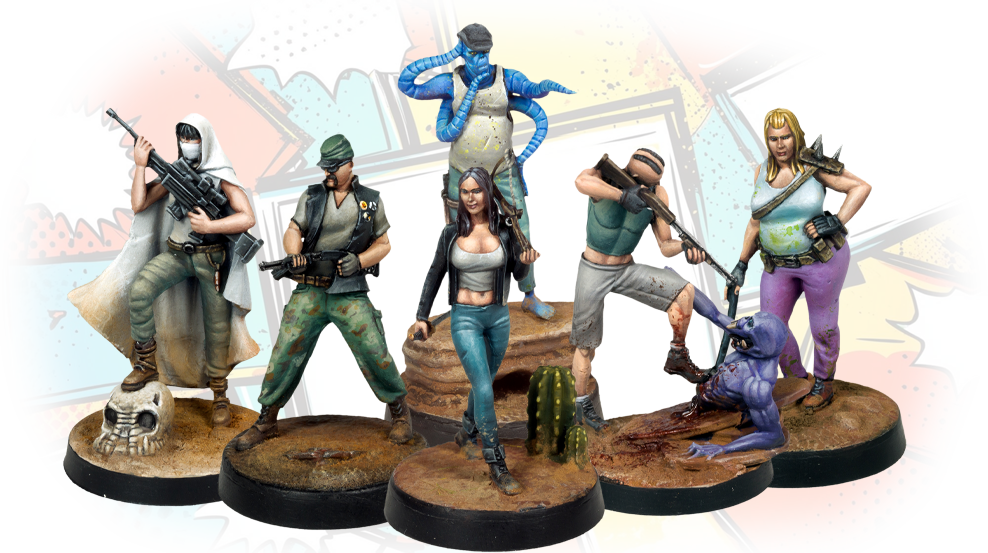
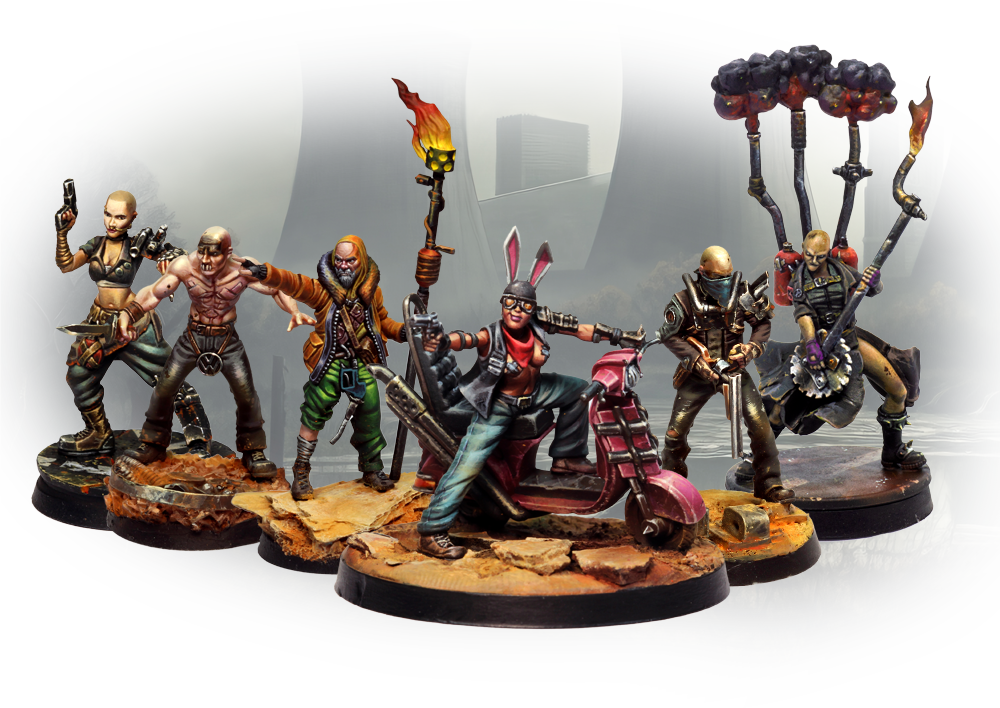
Little more to add: the protagonists of the Punkapocalyptic comic. They have a fixed team and only the Caronte miniature can be added to them.
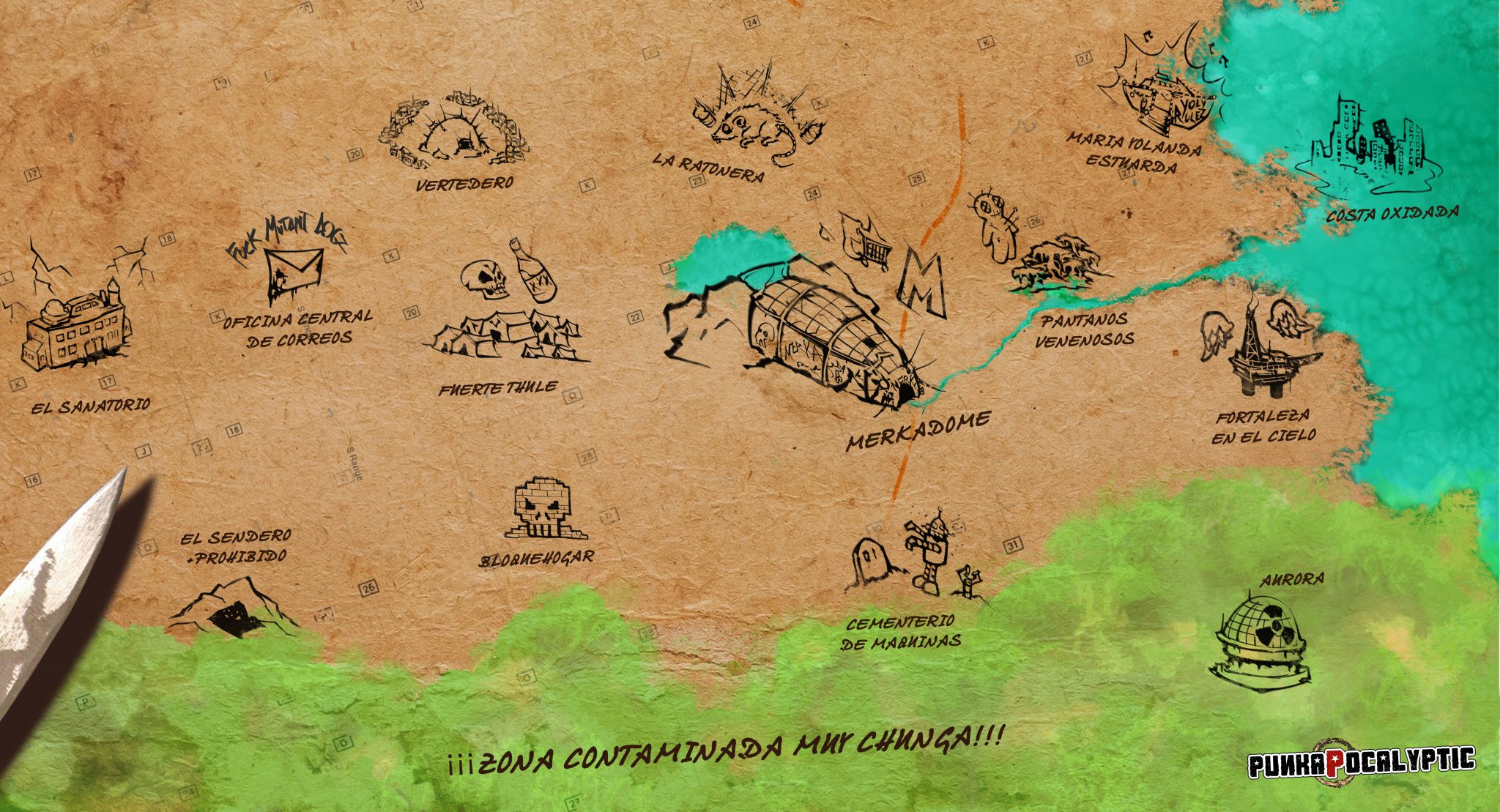
Attempting to cover the entire Wasteland would be impossible, since the entire world is the Wasteland, and there are countless factions throughout its expanse. Instead, we’ll focus on the area around Scrapbridge, one of the most important settlements for hundreds of miles around. It should be noted that this area is still a very vast territory, with only the most significant locations referenced.

Scrapbridge
Mines of Oblivion
Biter Hills
Samanthia
Pigsty
Majauchsuwi
Shrine of the Watch
Gleaming Towers
Festung Germania
Nowater
Permaban Pass
The Great Rift
Fatwind
Septic Tank
The Last Wastes
Boner
The Twins
The Acid Lands
Tex’co Refinery
Luckyland
The Living Forest
Dustbin
Mountains of the Lost Cult
The whole area south of Scrapbridge, similar in size to the map we now know, is being created mainly by the patrons of the Punkapocalyptic Patreon. Patrons make proposals and through voting, little by little everything is being completed, from the neighbourhoods to the creatures that populate it.
If you want to be part of this project, as well as participate in raffles, special offers and exclusive news, but above all help Punkapocalyptic to go ahead, don’t hesitate to sign up to the Patreon . Please bear in mind that all the information that appears here will be expanded, improved, etc…
"Here man, at the zenith of his wisdom, will never die, but will advance relentlessly towards perfection".
Zardoz, John Boorman, 1974

Río Brasilia
Ciudad de Plata
Boereland
New/Nuevo Álamo
San Ángeles
Liberty City
Maple Leaf City
Mediterránea D'or
Noveau Lumière
Roma-Vaticana
Freiheitfestung
United England
Thule
Putingorod
Luxor
Jerusalem
Imära
Poltohar Abad
Na'ï Kalakattä
Bêijïng
Nánjïng
Tökyö No Shita
Austral City
Atlantea (Location unknown)
All around the world there were planned more than twenty Megalopoli to shelter the rich and powerful, although some of them never were more than a simple project and a few of them have been destroyed. Not even the Eden dreamed by the world elites was really such a thing, as envy, corruption and hate, inherent to the human race, survived inside these idyllic walled havens.

MEGALOPOLI

FUCKED MEGALOPOLI

RADIATED AREAS


Undoubtedly, the most important settlement in the whole area is Sacrapbridge, the main trading post to be found in the Wasteland within a weeks’ journey.
It is located in the basin of what was once a river of considerable dimensions, under the remains of a huge bridge that crossed it. These remains are used to form a labyrinth of houses and various constructions hanging from it, which are linked to the lower part by walkways and manual lifts, giving the place various heights to move around on.
The settlement is well protected, with a pair of dam-like walls covering the entrances from the riverbed to that stretch of the river, and a series of barbed wire fences protecting access to the bridge above. However, it is not its walls that give it its ability to survive, but the status it has acquired among all the factions in this part of the Wasteland.
Puentechatarra is a neutral territory, a place to trade, get information or escape, without having to be aware of who might attack you.
Violence is forbidden here, and it is the factions themselves who see to it that it does not get in the way, punishing their own members harshly if they break the rules. Everyone knows that the Scrapbridge is a necessary place, a place to stock up and trade. Even the most rivalrous gangs are careful not to let things get out of hand, and even mutards can come here and deal with the other factions.
More than a thousand souls call Puentechatarra home. A series of greenhouses and farms provide food, and two deep wells are able to draw fresh water from underground. There are shops, taverns, brothels… the closest thing to paradise in the desolate landscape that surrounds it. An arena hockey stadium has even been built…
On the western edge of the Biter Hills there are the so-called Mines of Oblivion, named after the fate that awaits to all who enter them.
The entrance to the mines is hidden behind a concrete wall and a huge steel door, and no one has ever found out what is going on inside.
But there are cyclic rumors about people being kidnapped through all the Wasteland to work in its tunnels as slaves.
This group of small hills and gentle slopes is home to packs and packs of biters, small animals, but with a ferocity and huge jaws that make them relentless predators in groups.
It’s not a place to venture into alone.
Although Junkers are nomad and call no place home, if they would it would be this one. This spot owns its name to Samantha, former Scavenger that left behind the dangerous live of her kind because of love.
It is true that after that first love there have been at least a couple dozens more, but Samantha has kept her vow to stop wandering from one place to another and is now the self-proclaimed Baroness of this region (she tries to make people call it the Industrial Barony, but no one seems to obey).
This place is a maze of steam-powered machinery, mechanical devices and unbelievable contraptions. Accidental explosions occur almost on a daily basis and the locals have earned for themselves a reputation of being nuts.
But the fact is they have enough lethal machines to defend the place and, if you come in peace, it is the perfect spot to meet friendly Junkers to trade with.
Pigsty is the name of the ruins of a quite sizeable old city.
As it tends to happen in these places, the ruins are home to hunting mutant monstrosities, still working booby traps and huge numbers of addlers.
This place is easily detected from far away, because for some unknown reason it gives off an unbearable stench that reaches miles away from the ruins themselves.
Everything about this place is a mystery. Placed among several gentle hills, these are the remnants of an old Lenape settlement, an Indian tribe that dwelled on this land before the arrival of the white men.
All the area is fertile with ghost stories, old spirits that haunt the surrounding landscape. But these hills are inhabited, as an odd group that follows the old Lenape teachings has settled here, and they even speak their original tongue, which is puzzling enough as this language has been dead for more than a thousand years.
The very name of the place means “union” or “be a single mind”. This tribe is extremely territorial and the young braves don’t hesitate to kill any stranger that crosses the line of totem poles that act as border and warning.
Shrine of the Watch is nested upon the ruins of an old abbey, where the flock of followers of the Eye of Fire gathers
Little is known about this folk, as their congregation is quite hermetic and, in the few occasions they leave their refuge, always in groups, don’t say a word but to affirm that they follow the word of Yarus.
It is a general belief that most of the dwellings in the Shrine are underground, built inside a labyrinth-like series of tunnels and chambers.
This level of secrecy is a breeding ground to lots of rumors. A lot of people affirm that all the members of this cult have been kidnapped as children; others talk about cruel rituals of blood; but the only true thing so far is that no one has witnessed any of these cultists doing anything suspicious.
There are still some tall buildings of glass and steel standing amidst the ruins of this old city, one that suffered less than the rest in the nuclear showdown that brought hell to the States.When the Sun bathes them with its sunrays, they seem to shine like bright lighthouses all over the area.
It’s one of the favorite places for the Junkers to comb in search of valuable scrap and objects, in spite of being a dangerous place like all other city ruins.
Flocks of flying mutant creatures hunt every living being that wanders into their territory, and there are a higher number of booby traps and automated defense systems than usual.
This fortified place is the headquarters and boot camp of the Fifth Reich, a gang of militiamen who follow a radical pro-human creed.
Their leader, Aaron Schwartzman, found enlightment in some old documents from the 20th century about the German Nazi regimen and decided to call himself Feldmarschall and do the word of Adolph.
As he wasn’t really sure whether there had already been a Fourth Reich or not, he cleverly decided to baptize his gang as the Fifth Reich. This is an odd bunch to say the least, that reveres the figure of Adolph Hitler to almost sick levels.
All the members, whether men, women, white or black (yes, there are some black members in the Fifth Reich) have a little moustache tattooed over their upper lip, and a haircut with a fringe in the image of the mighty Führer. Although their looks may be quite grotesque, they are a dangerous lot and they don’t hesitate to kill if they need to. Their top activity is hunting mutards, which they see as an aberration of Nature and want to eradicate completely from Earth.
Nowater sits in the middle of an old lake, now completely dry. It is a dirty, smelly and almost lawless slum, surrounded by a wall of timber and metal plates. It wouldn’t be worth a single word here if it wasn’t the hotspot for the best and more popular pit fights in the entire region. Bets go on without a pause and bullets change hands at an astonishing rate.
And, if you are desperate enough and can do decently in a fight, you can make a living in the pits and became a legend such as Eight Fingers, Rufus the Gutter o Lethal Rosie.
Nowater is run by the Lords of the Pit, a pompous name that includes the four main families that pull the strings of all the betting and gambling operations in town. They have quite a good number of mercenaries on their payroll, so no one tries to take this business from them.
If you want to cross the Great Rift without having to take a detour of a shitdred of miles, the Permaban Pass is your only way.
In this place you can find a custom bridge made of metal sheets of any size, shape and origin, which looks to be about to plummet down anytime soon. The central stretch is raised up to prevent anyone from crossing unannounced. The guys watching over the bridge are as simple as a rattle’s mechanics: you pay, you cross, you don’t pay, go fuck yourself. That’s it.
They don’t care about your appearance, whether you are a trader or a raider; you want to cross, you pay their fee. Of course there has been people who planned to take them down to avoid paying, but they have several dozens of explosive charges set under the bridge ready to be set off if anyone goes fucking around their place. So long, this dissuasive measure has worked like a charm.
Not so many places in the Wasteland get a name so clear about what’s going on. This is a huge rift ripped out of nowhere hundreds of miles long and deep enough to spit a green gob into it and not even hearing it hit the bottom.
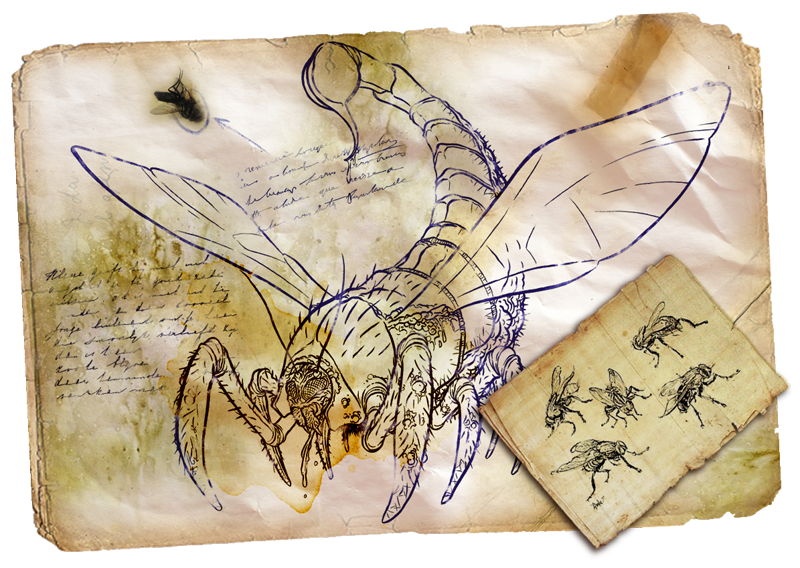
The only place to cross it without taking a huge detour is the Permaban Pass. You have to be careful around this place, though, as along the cliffs of clayey rocks you can find plenty of colonies of puppeteering hornets.
If you see anyone or anything acting weird you better get away fast, as it is most probably an addlernet, a creature in which puppeteering hornets have put there eggs into and has become a sort of zombie controlled by the larvae inside. Some really sick and nasty shit, dudes.
No one knows what’s beyond the Great Sea, but they all have heard about the last civilized place on its shores: Fatwind. If you manage to cross the ultrant infested beaches you will eventually come to see the imposing structure of a lighthouse rising from the sea.
. It is build on a small island, but it is possible to get there without having to swim as the locals have put together several shipwrecks, along with planks, handrails and ropes to make a path above the water. Thanks to its easily defensible location it has survived for quite a long time without much trouble and its inhabitants are willing to trade with anyone who is not a complete jerk.
This area is subject to strong storms and the sea is home to massive beasts, but even so these brave seafolk man small boats to go fishing along the coast. And yes, they have a funny look with their chitin armors and fancy hairstyles, and they eat disgusting things with scales, tentacles and shells, but as far as people go in this shithole called The Wasteland, they are pretty legal folks.
This settlement got its name thanks to the nauseating stench which rises from the greenish waters on which it is located, that in turn are the source of the main activity and income for the locals: megatroutasses fishing.
Septic Tank is divided in two clearly divided areas: Upper and Lower Septic Tank. Down in the lower area, at the same level as the stinky water, there is a cluster of huts connected by floating platforms and catwalks. This is home to fishermen and outcasts, who survive in crowded conditions among the leftovers of the local fishing industry.
The good part of the village is on the ruins of an old bridge, where local rulers live away from the infestations of those nasty leechcrabs (mean mollusks which feed from blood) and spend their time tormenting the poor souls in the lower zone.
Everyone in this part of the Wasteland knows that beyond the Last Wastes there is only death. No one has ever gone there and returned to tell the tale, at least none who could prove it.
There are always rumors about this place jumping from mouth to ear, people who know someone who went there and made it back, telling stories about a green Paradise of fertile land, or an endless graveyard, or a thousand different tall tales.
There are quite a few individuals recently that swear to have heard violent explosions and seen huge smoke columns beyond the Last Wastes. But once again, who would believe any such story told about this place?
Upon the ruins of an old airport exists one of the weirdest settlements you can find in this area: Boner. The place has been turned into a racing track of… anything.
Here racing bets are everyday’s shit and everyone is always competing on seeing who’s got the bigger one. From Wasteland beast riders to addler chariots, everything is worth a bet. The only rule is to complete the agreed laps around the circuit and get back to the start/finish line alive, no matter what the fuck you do during the race as everything is allowed.
This settlement is ruled by the Hucksters, the most powerful group of merchants in the area, said by some to be descendants of Junkers who wanted to run their own businesses. They rule the place with sharp razors, which they will use to slice your scrotum open and use it as a spare change pouch if you try to outsmart them. They don’t give a fuck about your skin color, your size or your shape, only about the size of your money bag or the amount of merchandise you want to trade with; here you will find everything on sale, from a platepanty to a sexaddler for your darkest nights of desire. The marketplace is surrounded by shacks and containers known as the Stables, where the animals and wheels for the races are kept and prepared. Boner is called like that for the shape of the settlement watched from a distance. You know, an oval, a cucumber… Gosh, fuck it, ¡a stiff dick! That’s why almost everyone call this racing track “Dickus Maximus”.
The Twins rise as two giants amidst the Wasteland, keeping watch of their surroundings. These huge structures are actually the last two reactors still standing from an old nuclear power plant, but for a bunch of mutards they represent much more: home.
Surrounded by miles of terrain where contamination is lethal for human beings, these mutards can live with relative safety in this place, led by a mysterious mutant who calls himself Prometheus.
There are plenty of rumors about this mutard; some of them say that he only wants to live in peace, others claim that he is raising an army to conquer the Wasteland with his New Race. The only sure thing is that for now he hasn’t made any move, and even his very existence is still a mystery.
The Acid Lands are a stretch of territory spanning from The Twins to the Tex’co Refinery. A vast piece of volcanic land with geysers, toxic vents, sulphur lakes, lava rivers and several other pleasant features.
For some reason each passing year this territory gets bigger, and the older wastelanders say that their grandparents told them that region was once a quite normal place.
People tend to avoid crossing this area, as it is rough, there is no water in miles, the atmosphere is quite poisonous and every now and then there are earthshakes and rockslides. Even so there are evidences that someone lives here, as people not very prone to bark lies have spoken about the legendary longleg riders.
A bunch of working oil pumps and wells line around a big refinery, all of it behind sturdy walls guarded 24/7.
This settlement belongs to the Black Blood Children, a congregation that worships oil as a mystic force of Nature provided by Tex’co, an old deity of sorts.
The remains of Luckyland are undoubtedly one of the weirdest places in this corner of the World. This is an old fairground divided into four quadrants with different themes: Caribbean Corsairs, Samurai Showdown, Western World and Medieval Mayhem, all of them around a central zone consecrated to the coolest things of the late 20th century: Retro Revival.
In spite of the time since this place was running, many of its structures still stand tall. This is due to the fact that many of the cutting edge human-looking animatronics (and others with more unsettling appearances, such as the Virgin Gamer and Hot Cosplayer mascots), were not only in charge of the different shows offered, but also had to keep maintenance routines that are still active.
But their lines of code seem to be corrupted somehow, as any visitor is automatically seen as an intruder to be hunted down. This place is truly a state-of-the-art wonder worthy of visiting, although doing so will turn you into a shooting gallery target, quite literally.
Far to the North of what we can consider the “surroundings” of Scrapbridge there is a place known as the Living Forest. We all know that most of the area we live in is a thirsty, dry ground forgotten by the Universe, but the Living Forest is quite the contrary.
Plants have grown out of proportions and there are trees that you can’t see the top of, with such an abundance of vegetation that visibility is quite low. In this place that which is not poisonous can eat you whole, whether vegetal or animal. You can eat tasty fruits not to be found anywhere else, but you will need some brazen balls to go get them.
Rumors abound about intelligent plants, wild men and women and trees that walk, but the most persisten one is the one about humanoid monkeys who ride dinosaurs. But don’t pay much attention, as no one has gone deep enough into this territory and returned to tell the tale.
There is almost no building left standing tall amongst the ruins of this city of the World of Before. Rubble blocks the streets and there is a lingering, thick, dark dust floating everywhere which darks sight even at midday.
But knowing as you all know that old cities are dangerous places to stay, and being this one in particular even meaner than the average, the weirdest thing is to find out that there is actual people living in this region.
We don’t have a frigging clue whether they are fully human or otherwise, as they always roam about with several layers of clothes on and with their full biohazard protections covering their faces. Everyone reckons they are ugly as fuck as the main reason to be always hidden under so much clothes. Every now and then one of them leaves the city to trade (always traveling alone) and, well, they don’t speak much and never get into trouble by their own choice.
They seem to be living in some kind of underground shelter, in spite of the constant danger of Dustbin they search the ruins by day to scavenge anything they might need, and they are alright enough fellas to give you a warning before slitting your throat if you wander too much into their territory.
On the northernmost part of the Scrapbridge area there is a mountain range where lay the remains of an old citadel known today only as the Fortress of Bad Mojo.
These ruins stretch for several sloping acres across the landscape, in a combination of terraces, cliffs, ledges and bluffs. Stuffed among this rough terrain there is a core of buildings, alleys and walls, all built taking advantage of the mountains themselves. Fallen walls and collapsed buildings block many streets, and those structures still standing could fall apart if you farted too hard.
Aside from what can be seen on the surface, there are plenty of tunnels and passageways open into the mountains. Except for a few lost exists scattered here and there, the only way to access those tunnels is through the ruins.
The Lost Cult mentioned in the name of this place is, contrary to what you might be thinking, a recent group of people created in the Scrapbridge area some 40 years ago (and not the name of the former owners of this fortress). The cult believed in some form of “superior beings” born in the stars that someday would come back to take them.
They managed to recruit a caravan of hundreds of persons to head far North, beyond any place recorded in the maps, to reach the place where these beings would return to this world. But when they were crossing this mountains, they vanished without a trace. All of them, no hints, no bodies, no object left behind to give any clue.
Rumors, of course, are as numerous as hairs has my asshole. A mutant beast swallowed them all, or maybe these divine beings decided to pick them up further South to spare them the long walk. They might be living in the deepest parts of the old fortress as cannibals, or they were turned into haunting spirits due to an old curse. Whatever the truth is, this is a place no one would ever want to willingly visit.
Undoubtedly, the most important settlement in the whole area is Sacrapbridge, the main trading post to be found in the Wasteland within a weeks’ journey.
It is located in the basin of what was once a river of considerable dimensions, under the remains of a huge bridge that crossed it. These remains are used to form a labyrinth of houses and various constructions hanging from it, which are linked to the lower part by walkways and manual lifts, giving the place various heights to move around on.
The settlement is well protected, with a pair of dam-like walls covering the entrances from the riverbed to that stretch of the river, and a series of barbed wire fences protecting access to the bridge above. However, it is not its walls that give it its ability to survive, but the status it has acquired among all the factions in this part of the Wasteland.
Puentechatarra is a neutral territory, a place to trade, get information or escape, without having to be aware of who might attack you.
Violence is forbidden here, and it is the factions themselves who see to it that it does not get in the way, punishing their own members harshly if they break the rules. Everyone knows that the Scrapbridge is a necessary place, a place to stock up and trade. Even the most rivalrous gangs are careful not to let things get out of hand, and even mutards can come here and deal with the other factions.
More than a thousand souls call Puentechatarra home. A series of greenhouses and farms provide food, and two deep wells are able to draw fresh water from underground. There are shops, taverns, brothels… the closest thing to paradise in the desolate landscape that surrounds it. An arena hockey stadium has even been built…
On the western edge of the Biter Hills there are the so-called Mines of Oblivion, named after the fate that awaits to all who enter them.
The entrance to the mines is hidden behind a concrete wall and a huge steel door, and no one has ever found out what is going on inside.
But there are cyclic rumors about people being kidnapped through all the Wasteland to work in its tunnels as slaves.
This group of small hills and gentle slopes is home to packs and packs of biters, small animals, but with a ferocity and huge jaws that make them relentless predators in groups.
It’s not a place to venture into alone.
Although Junkers are nomad and call no place home, if they would it would be this one. This spot owns its name to Samantha, former Scavenger that left behind the dangerous live of her kind because of love.
It is true that after that first love there have been at least a couple dozens more, but Samantha has kept her vow to stop wandering from one place to another and is now the self-proclaimed Baroness of this region (she tries to make people call it the Industrial Barony, but no one seems to obey).
This place is a maze of steam-powered machinery, mechanical devices and unbelievable contraptions. Accidental explosions occur almost on a daily basis and the locals have earned for themselves a reputation of being nuts.
But the fact is they have enough lethal machines to defend the place and, if you come in peace, it is the perfect spot to meet friendly Junkers to trade with.
Pigsty is the name of the ruins of a quite sizeable old city.
As it tends to happen in these places, the ruins are home to hunting mutant monstrosities, still working booby traps and huge numbers of addlers.
This place is easily detected from far away, because for some unknown reason it gives off an unbearable stench that reaches miles away from the ruins themselves.
Everything about this place is a mystery. Placed among several gentle hills, these are the remnants of an old Lenape settlement, an Indian tribe that dwelled on this land before the arrival of the white men.
All the area is fertile with ghost stories, old spirits that haunt the surrounding landscape. But these hills are inhabited, as an odd group that follows the old Lenape teachings has settled here, and they even speak their original tongue, which is puzzling enough as this language has been dead for more than a thousand years.
The very name of the place means “union” or “be a single mind”. This tribe is extremely territorial and the young braves don’t hesitate to kill any stranger that crosses the line of totem poles that act as border and warning.
Shrine of the Watch is nested upon the ruins of an old abbey, where the flock of followers of the Eye of Fire gathers
Little is known about this folk, as their congregation is quite hermetic and, in the few occasions they leave their refuge, always in groups, don’t say a word but to affirm that they follow the word of Yarus.
It is a general belief that most of the dwellings in the Shrine are underground, built inside a labyrinth-like series of tunnels and chambers.
This level of secrecy is a breeding ground to lots of rumors. A lot of people affirm that all the members of this cult have been kidnapped as children; others talk about cruel rituals of blood; but the only true thing so far is that no one has witnessed any of these cultists doing anything suspicious.
There are still some tall buildings of glass and steel standing amidst the ruins of this old city, one that suffered less than the rest in the nuclear showdown that brought hell to the States.When the Sun bathes them with its sunrays, they seem to shine like bright lighthouses all over the area.
It’s one of the favorite places for the Junkers to comb in search of valuable scrap and objects, in spite of being a dangerous place like all other city ruins.
Flocks of flying mutant creatures hunt every living being that wanders into their territory, and there are a higher number of booby traps and automated defense systems than usual.
This fortified place is the headquarters and boot camp of the Fifth Reich, a gang of militiamen who follow a radical pro-human creed.
Their leader, Aaron Schwartzman, found enlightment in some old documents from the 20th century about the German Nazi regimen and decided to call himself Feldmarschall and do the word of Adolph.
As he wasn’t really sure whether there had already been a Fourth Reich or not, he cleverly decided to baptize his gang as the Fifth Reich. This is an odd bunch to say the least, that reveres the figure of Adolph Hitler to almost sick levels.
All the members, whether men, women, white or black (yes, there are some black members in the Fifth Reich) have a little moustache tattooed over their upper lip, and a haircut with a fringe in the image of the mighty Führer. Although their looks may be quite grotesque, they are a dangerous lot and they don’t hesitate to kill if they need to. Their top activity is hunting mutards, which they see as an aberration of Nature and want to eradicate completely from Earth.
Nowater sits in the middle of an old lake, now completely dry. It is a dirty, smelly and almost lawless slum, surrounded by a wall of timber and metal plates. It wouldn’t be worth a single word here if it wasn’t the hotspot for the best and more popular pit fights in the entire region. Bets go on without a pause and bullets change hands at an astonishing rate.
And, if you are desperate enough and can do decently in a fight, you can make a living in the pits and became a legend such as Eight Fingers, Rufus the Gutter o Lethal Rosie.
Nowater is run by the Lords of the Pit, a pompous name that includes the four main families that pull the strings of all the betting and gambling operations in town. They have quite a good number of mercenaries on their payroll, so no one tries to take this business from them.
If you want to cross the Great Rift without having to take a detour of a shitdred of miles, the Permaban Pass is your only way.
In this place you can find a custom bridge made of metal sheets of any size, shape and origin, which looks to be about to plummet down anytime soon. The central stretch is raised up to prevent anyone from crossing unannounced. The guys watching over the bridge are as simple as a rattle’s mechanics: you pay, you cross, you don’t pay, go fuck yourself. That’s it.
They don’t care about your appearance, whether you are a trader or a raider; you want to cross, you pay their fee. Of course there has been people who planned to take them down to avoid paying, but they have several dozens of explosive charges set under the bridge ready to be set off if anyone goes fucking around their place. So long, this dissuasive measure has worked like a charm.
Not so many places in the Wasteland get a name so clear about what’s going on. This is a huge rift ripped out of nowhere hundreds of miles long and deep enough to spit a green gob into it and not even hearing it hit the bottom.
The only place to cross it without taking a huge detour is the Permaban Pass. You have to be careful around this place, though, as along the cliffs of clayey rocks you can find plenty of colonies of puppeteering hornets.
If you see anyone or anything acting weird you better get away fast, as it is most probably an addlernet, a creature in which puppeteering hornets have put there eggs into and has become a sort of zombie controlled by the larvae inside. Some really sick and nasty shit, dudes.
No one knows what’s beyond the Great Sea, but they all have heard about the last civilized place on its shores: Fatwind. If you manage to cross the ultrant infested beaches you will eventually come to see the imposing structure of a lighthouse rising from the sea.
. It is build on a small island, but it is possible to get there without having to swim as the locals have put together several shipwrecks, along with planks, handrails and ropes to make a path above the water. Thanks to its easily defensible location it has survived for quite a long time without much trouble and its inhabitants are willing to trade with anyone who is not a complete jerk.
This area is subject to strong storms and the sea is home to massive beasts, but even so these brave seafolk man small boats to go fishing along the coast. And yes, they have a funny look with their chitin armors and fancy hairstyles, and they eat disgusting things with scales, tentacles and shells, but as far as people go in this shithole called The Wasteland, they are pretty legal folks.
This settlement got its name thanks to the nauseating stench which rises from the greenish waters on which it is located, that in turn are the source of the main activity and income for the locals: megatroutasses fishing.
Septic Tank is divided in two clearly divided areas: Upper and Lower Septic Tank. Down in the lower area, at the same level as the stinky water, there is a cluster of huts connected by floating platforms and catwalks. This is home to fishermen and outcasts, who survive in crowded conditions among the leftovers of the local fishing industry.
The good part of the village is on the ruins of an old bridge, where local rulers live away from the infestations of those nasty leechcrabs (mean mollusks which feed from blood) and spend their time tormenting the poor souls in the lower zone.
Everyone in this part of the Wasteland knows that beyond the Last Wastes there is only death. No one has ever gone there and returned to tell the tale, at least none who could prove it.
There are always rumors about this place jumping from mouth to ear, people who know someone who went there and made it back, telling stories about a green Paradise of fertile land, or an endless graveyard, or a thousand different tall tales.
There are quite a few individuals recently that swear to have heard violent explosions and seen huge smoke columns beyond the Last Wastes. But once again, who would believe any such story told about this place?
Upon the ruins of an old airport exists one of the weirdest settlements you can find in this area: Boner. The place has been turned into a racing track of… anything.
Here racing bets are everyday’s shit and everyone is always competing on seeing who’s got the bigger one. From Wasteland beast riders to addler chariots, everything is worth a bet. The only rule is to complete the agreed laps around the circuit and get back to the start/finish line alive, no matter what the fuck you do during the race as everything is allowed.
This settlement is ruled by the Hucksters, the most powerful group of merchants in the area, said by some to be descendants of Junkers who wanted to run their own businesses. They rule the place with sharp razors, which they will use to slice your scrotum open and use it as a spare change pouch if you try to outsmart them. They don’t give a fuck about your skin color, your size or your shape, only about the size of your money bag or the amount of merchandise you want to trade with; here you will find everything on sale, from a platepanty to a sexaddler for your darkest nights of desire. The marketplace is surrounded by shacks and containers known as the Stables, where the animals and wheels for the races are kept and prepared. Boner is called like that for the shape of the settlement watched from a distance. You know, an oval, a cucumber… Gosh, fuck it, ¡a stiff dick! That’s why almost everyone call this racing track “Dickus Maximus”.
The Twins rise as two giants amidst the Wasteland, keeping watch of their surroundings. These huge structures are actually the last two reactors still standing from an old nuclear power plant, but for a bunch of mutards they represent much more: home.
Surrounded by miles of terrain where contamination is lethal for human beings, these mutards can live with relative safety in this place, led by a mysterious mutant who calls himself Prometheus.
There are plenty of rumors about this mutard; some of them say that he only wants to live in peace, others claim that he is raising an army to conquer the Wasteland with his New Race. The only sure thing is that for now he hasn’t made any move, and even his very existence is still a mystery.
The Acid Lands are a stretch of territory spanning from The Twins to the Tex’co Refinery. A vast piece of volcanic land with geysers, toxic vents, sulphur lakes, lava rivers and several other pleasant features.
For some reason each passing year this territory gets bigger, and the older wastelanders say that their grandparents told them that region was once a quite normal place.
People tend to avoid crossing this area, as it is rough, there is no water in miles, the atmosphere is quite poisonous and every now and then there are earthshakes and rockslides. Even so there are evidences that someone lives here, as people not very prone to bark lies have spoken about the legendary longleg riders.
A bunch of working oil pumps and wells line around a big refinery, all of it behind sturdy walls guarded 24/7.
This settlement belongs to the Black Blood Children, a congregation that worships oil as a mystic force of Nature provided by Tex’co, an old deity of sorts.
The remains of Luckyland are undoubtedly one of the weirdest places in this corner of the World. This is an old fairground divided into four quadrants with different themes: Caribbean Corsairs, Samurai Showdown, Western World and Medieval Mayhem, all of them around a central zone consecrated to the coolest things of the late 20th century: Retro Revival.
In spite of the time since this place was running, many of its structures still stand tall. This is due to the fact that many of the cutting edge human-looking animatronics (and others with more unsettling appearances, such as the Virgin Gamer and Hot Cosplayer mascots), were not only in charge of the different shows offered, but also had to keep maintenance routines that are still active.
But their lines of code seem to be corrupted somehow, as any visitor is automatically seen as an intruder to be hunted down. This place is truly a state-of-the-art wonder worthy of visiting, although doing so will turn you into a shooting gallery target, quite literally.
Far to the North of what we can consider the “surroundings” of Scrapbridge there is a place known as the Living Forest. We all know that most of the area we live in is a thirsty, dry ground forgotten by the Universe, but the Living Forest is quite the contrary.
Plants have grown out of proportions and there are trees that you can’t see the top of, with such an abundance of vegetation that visibility is quite low. In this place that which is not poisonous can eat you whole, whether vegetal or animal. You can eat tasty fruits not to be found anywhere else, but you will need some brazen balls to go get them.
Rumors abound about intelligent plants, wild men and women and trees that walk, but the most persisten one is the one about humanoid monkeys who ride dinosaurs. But don’t pay much attention, as no one has gone deep enough into this territory and returned to tell the tale.
There is almost no building left standing tall amongst the ruins of this city of the World of Before. Rubble blocks the streets and there is a lingering, thick, dark dust floating everywhere which darks sight even at midday.
But knowing as you all know that old cities are dangerous places to stay, and being this one in particular even meaner than the average, the weirdest thing is to find out that there is actual people living in this region.
We don’t have a frigging clue whether they are fully human or otherwise, as they always roam about with several layers of clothes on and with their full biohazard protections covering their faces. Everyone reckons they are ugly as fuck as the main reason to be always hidden under so much clothes. Every now and then one of them leaves the city to trade (always traveling alone) and, well, they don’t speak much and never get into trouble by their own choice.
They seem to be living in some kind of underground shelter, in spite of the constant danger of Dustbin they search the ruins by day to scavenge anything they might need, and they are alright enough fellas to give you a warning before slitting your throat if you wander too much into their territory.
On the northernmost part of the Scrapbridge area there is a mountain range where lay the remains of an old citadel known today only as the Fortress of Bad Mojo.
These ruins stretch for several sloping acres across the landscape, in a combination of terraces, cliffs, ledges and bluffs. Stuffed among this rough terrain there is a core of buildings, alleys and walls, all built taking advantage of the mountains themselves. Fallen walls and collapsed buildings block many streets, and those structures still standing could fall apart if you farted too hard.
Aside from what can be seen on the surface, there are plenty of tunnels and passageways open into the mountains. Except for a few lost exists scattered here and there, the only way to access those tunnels is through the ruins.
The Lost Cult mentioned in the name of this place is, contrary to what you might be thinking, a recent group of people created in the Scrapbridge area some 40 years ago (and not the name of the former owners of this fortress). The cult believed in some form of “superior beings” born in the stars that someday would come back to take them.
They managed to recruit a caravan of hundreds of persons to head far North, beyond any place recorded in the maps, to reach the place where these beings would return to this world. But when they were crossing this mountains, they vanished without a trace. All of them, no hints, no bodies, no object left behind to give any clue.
Rumors, of course, are as numerous as hairs has my asshole. A mutant beast swallowed them all, or maybe these divine beings decided to pick them up further South to spare them the long walk. They might be living in the deepest parts of the old fortress as cannibals, or they were turned into haunting spirits due to an old curse. Whatever the truth is, this is a place no one would ever want to willingly visit.
In ancient times, unemployment and poverty plagued the planet. To try to combat this, some leader came up with the idea of creating a huge factory city where thousands of workers would build robots of all shapes and sizes but never for functions that a human being could do.
At the same time they were offered reduced-price accommodation where they could reside with their families. Merkadome was in fact built relatively close by and linked by an underground high-speed train, to provide a place of leisure where all these people could spend their newly earned money.
A fair job, a living wage… of course, it didn’t take long for the rulers to change and decide that it was much more profitable to use the robots that were manufactured there to build more of the robots themselves. And, well, almost giving away so much housing was stupid. If these people worked, they might as well pay 90% of their salaries to live there.
Of course, it gradually began to be abandoned by human workers until it became a fully automated place. With the construction of the megalopolises the whole place was “shut down” and abandoned.
Today we can find in the Machine Graveyard, as the people of the Wasteland know it, the remains of those robots that both built and were built. The place could be any scrap dealer’s wettest dream if it weren’t for the enormous dangers involved in going there.
Dangerous beasts of the Wasteland call this place home and lurk from the twisted remains of the buildings. But most of all, somehow some areas still retain energy and from there hostile robots do not hesitate to wipe out any human being (which for them includes mutards, which gives one pause for thought) who wanders in. There are numerous rumours about the place, from that some robots have acquired self-awareness and are building their own army of machines to that one faction (which one depends on who tells you) has obtained technology there that will make them unstoppable.
Homeblock, better known as the Shifting Village, despite its small size, is one of the most curious settlements you can find. The whole thing was built on (in fact, with) the remains of an old theme park from a bygone era.
It seems that the first settlers realised the usefulness of the countless coloured plastic pieces (originally conceived as a children’s building game) as a raw material to build the structures necessary to ensure their survival in the Páramo. They had found a durable and resistant material, which they could fit together and dismantle just as easily and without the need for tools.
So, armed only with remarkable patience, they set about dismantling all the monumental representations, sculptures and other assorted nonsense of the monguers of yesteryear and using the pieces to erect tall, multicoloured walls.
Several generations later, its current inhabitants are busy, under the shelter of its imposing defences, constructing buildings of different shapes and sizes, dismantling others in order to do so. All this in a relentless urban planning race orchestrated by its erratic ruling council.
Far to the west of Merkadome, on the edge of the contaminated zone, a large portion of land collapsed, revealing a huge cavern whose ramifications ran south under the radiation- and death-ravaged earth.
Inside opens up what is known as the Forbidden Path, a labyrinthine network of tunnels and caverns from which rumour has it that if traversed, rich and habitable new lands beyond the contaminated zone can be reached.
And why isn’t it full of travellers? For one thing, no one has managed to map the trail properly and it is easy to get lost in its many tunnels and never see the light of day again. On the other hand, it is full of dangers, and not just natural ones such as landslides, chasms that can only be crossed by narrow passages and even rivers of lava, or even the typical creatures and mutations of the Wasteland. No, down there are more ancient and terrible creatures lurking in the darkness. Beings that have been trapped for eons and now want to return to reclaim what they believe is theirs. Or so they say.
There are very few legends that are believed to come from the times of the Old World, but one of them is the Curse of the Sanatorium.
In the last days before the creation of the Megalopolis it was set up as a high-level centre for the cure of addictions, traumas, phobias, depressions and similar problems. Its effectiveness was as incredible as its price, but no one knew its methods, as anyone who entered was forbidden to tell what happened there… and the most surprising thing is that no one did.
Obviously gossip about the place was common, from those who accused them of using placentas to those who believed it was a way of creating servants of extradimensional creatures. But things went even further after “the incident”. A supposed gas leak, which no one could really explain clearly, killed everyone in the Sanatorium suddenly.
The place was completely empty in the middle of nowhere. From then on, there were constant stories about ghosts inhabiting the place.
The fact that many of the researchers who went there went completely mad did not help matters. The fall of civilisation failed to quell all these legends. Although the site has been preserved in almost perfect condition ever since, no one has claimed it as a settlement.
Those who have tried have disappeared, lost their minds or committed suicide within days. The few words that have been repeated among the latter is “the book”.
Undoubtedly, there are few places that can live up to its name more than Vertedero, for it is nothing more than that.
It was the place where the locals in the Old World dumped their enormous amounts of rubbish. A sort of huge hole, surrounded by walls advancing inwards in the form of a staircase, which in a way resembles a coliseum with debris and a terrible stench in place of spectacles.
Since no one wanted to go there, it became a good place where mutards could take refuge, safe from the hatred they often generate among humans. Gradually, the area around the walls became filled with more and more buildings of the ever-growing mutard community. At its centre is the building where a big-headed (but very, very big-headed) resides and rules over these poor wretches.
In the times of the Old World, President Trump Beta (a clone of Donald Trump with certain flaws) decided to build the world’s largest shopping mall, almost like a small city. A huge android factory had been set up nearby, and its workers needed a place to spend their money. Yet visitors from all over the country and even beyond came to visit the place.
After the creation of the Megalopolis and the abandonment of the outside world, the place fell into disrepair and became overrun with mutant beasts and other creatures. Although the dome managed to resist, parts of the interior have collapsed over the car parks and the sewage system below. In general, the risk of inhabiting the place was too great… until a few dozen years ago.
A group of disgruntled Parameans, who depending on the rumour came from the Puentechatarra area, from beyond the Great Sea or from a thousand other places, managed to occupy a small area of the site, and more importantly managed to restore some of the power provided by the dam. The place became known as Merkadome, and once word spread more and more of the Wasteland’s inhabitants came to live there, until it became the mighty settlement it is today.
In reality only a small part of the mall is actually habitable. Most of it is wilderness and danger zones that, although they house technology from the Old World, generally lead only to death. Despite all this, “civilisation” has been growing through the structure of the mall as if it were a city. Tin shacks, fighting pits, precariously added structures and walkways, docks on the river side…
The Poison Marshes are located between Merkadome and the Rusty Coast, tapping into the flow from the dam at the old trading centre.
They consist of a combination of wetlands, lagoons and meandering channels covered with surprisingly lush and dense vegetation. The most distinctive feature of the Poison Swamps is their well-deserved name. The water flowing through them is impregnated with toxic and poisonous substances, the result of pollution generated by past environmental conflicts and disasters.
This poisoning of the water has led to the death of many life forms, including animals and plants, and has created a hostile environment for most living things. The vegetation in the Poison Swamps is mainly composed of twisted mangroves and swamp trees, which rise from the muddy waters.
These plants have developed special adaptations to survive in conditions of low oxygenation and toxic soils. Their roots intertwine in an intricate network, forming an impenetrable, swampy labyrinth.
Exploring the Poisonous Swamps itself is a risky undertaking due to adverse conditions and hidden dangers.
Apart from the toxicity of the water, visitors must contend with unstable and slippery terrain, poisonous insects and natural traps. Navigating the tortuous channels is difficult and requires skill and local knowledge.
But as if that weren’t enough, recently a group of mutards led by a certain Mama Guedé have moved in and are doing some pretty scary voodoo stuff.
In the waters near the Rusty Coast, between Merkadome and Vientocho, there is a huge abandoned recreational cruiser, on the structure of which graffiti can be read in very, very large letters: “THE FUCKING MARY YOLANDA STUARDS… BITCHES!!!” Adorned with a hugely obscene comb next to it.
Far from being just another ghostly location in the Wasteland, this recreational boat is always tackily lit up with festive lights, flames of fire and every bright and shiny sign imaginable, because it’s the biggest party joint in the whole wasteland. Run by the infamous party promoter “La Yoly” and with a brutal “human” team (bodyguards in thongs and oiled sunglasses, midget waiters in tutus, people in animal costumes and a whole multidisciplinary team of former junkyards and Sons of the Black Blood addicted to speed), keeps this little corner of pleasure always running 24/7 so that the party reaches heights of savagery that would wet your daddy’s knickers.
If you’ve ever imagined perversion or gotten high on hardware… it’s happened there before and worse. You can find interspecies love! Love between appliances! Latex! Drugs! DJ mongo! …. All that and more on Yoly’s fucking boat!
A vast stretch of coastline filled with the buildings and constructions of a once majestic city, rising from the ocean waters that engulfed it. The labyrinthine mix of rises, ruins and skyscrapers that emerge from these dark and ever-misty waters, where sea and flying monstrosities alike lurk, is an ominous sight. Numerous valuable resources have been isolated here, forgotten on the islands that were once skyscrapers and in the cavernous ruins that abound both above and below the surface.
This wide coastline, with its obscure reputation, is nevertheless slightly more passable than the not-too-distant Torrebrillantes, and is frequented by reckless treasure hunters and Craabian expeditions. But despite being an interesting waypoint where Merkadome caravans trade with Vientocho ships, it is still very treacherous and dangerous waters. Some little refuge can be found on its borders in the form of enclaves, full of smugglers, cheap alcohol brought from Merkadome and dark local legends. For there is little law to tame this wide but irregular expanse where scavenging bandits and pirates of all stripes thrive.
A long time ago, in the most turbulent times when everything went to hell, modern technology in big cities started to be erratic.
In one of those failures, an ancient orbital station project for the rich people, created by the Wayland Puttani megacorporation, hurtled towards the earth’s surface in a brutal fireball like a fiery lappet of God. It landed several kilometres away from the area where the decaying settlement of Merkadome now stands.
As if the gaping hole in the ground caused by the nugget wasn’t enough, a strange phenomenon occurred over the years, most likely due to the stupid experiments and millionaire’s mind-warps going on inside. A huge, powerful electromagnetic field began to drag in junk from the old world along with the space debris and fused it with the rest of the city below, eventually creating a city of junk. Gates, pipes and debris, with no order or harmony whatsoever. A deadly mousetrap, full of treasures from the Old World, it attracted dangerous creatures alike.
Over time the effect has ceased but has maintained the structure and the amalgam of strange shapes worthy of the mind of a madman… Fixed and stable, but with strange climatic effects and flickering lights that continue to plague the area, giving it a more ghostly and unsettling air if possible.
The strangest thing of all is that when the first bands decided to get ballsy and see what they could scratch there without dying, someone had installed huge screens on its periphery, which strangely broadcast what was inside its nightmarish interior.
The good people of the Páramo, in their entrepreneurial zeal, saw the opportunity and quickly fortified the area, put up fences and spikes, dens of vice and small shops with shit that nobody wants but everyone buys, creating “la Ratonera”. It is an ultra-violent sport-spectacle where those who dare, enter this kilometre-long rubbish dump for several days in search of wealth and fame, while the rest are entertained watching the thousand and one stupidest ways they have to die, waiting for the day when the strange phenomenon appears again and everyone dies, filthy rich, but turned to mush… Risk is the best drug… that and cocaine.
*** Translated with www.DeepL.com/Translator (free version) ***
In ancient times, unemployment and poverty plagued the planet. To try to combat this, some leader came up with the idea of creating a huge factory city where thousands of workers would build robots of all shapes and sizes but never for functions that a human being could do.
At the same time they were offered reduced-price accommodation where they could reside with their families. Merkadome was in fact built relatively close by and linked by an underground high-speed train, to provide a place of leisure where all these people could spend their newly earned money.
A fair job, a living wage… of course, it didn’t take long for the rulers to change and decide that it was much more profitable to use the robots that were manufactured there to build more of the robots themselves. And, well, almost giving away so much housing was stupid. If these people worked, they might as well pay 90% of their salaries to live there.
Of course, it gradually began to be abandoned by human workers until it became a fully automated place. With the construction of the megalopolises the whole place was “shut down” and abandoned.
Today we can find in the Machine Graveyard, as the people of the Wasteland know it, the remains of those robots that both built and were built. The place could be any scrap dealer’s wettest dream if it weren’t for the enormous dangers involved in going there.
Dangerous beasts of the Wasteland call this place home and lurk from the twisted remains of the buildings. But most of all, somehow some areas still retain energy and from there hostile robots do not hesitate to wipe out any human being (which for them includes mutards, which gives one pause for thought) who wanders in. There are numerous rumours about the place, from that some robots have acquired self-awareness and are building their own army of machines to that one faction (which one depends on who tells you) has obtained technology there that will make them unstoppable.
Homeblock, better known as the Shifting Village, despite its small size, is one of the most curious settlements you can find. The whole thing was built on (in fact, with) the remains of an old theme park from a bygone era.
It seems that the first settlers realised the usefulness of the countless coloured plastic pieces (originally conceived as a children’s building game) as a raw material to build the structures necessary to ensure their survival in the Páramo. They had found a durable and resistant material, which they could fit together and dismantle just as easily and without the need for tools.
So, armed only with remarkable patience, they set about dismantling all the monumental representations, sculptures and other assorted nonsense of the monguers of yesteryear and using the pieces to erect tall, multicoloured walls.
Several generations later, its current inhabitants are busy, under the shelter of its imposing defences, constructing buildings of different shapes and sizes, dismantling others in order to do so. All this in a relentless urban planning race orchestrated by its erratic ruling council.
Far to the west of Merkadome, on the edge of the contaminated zone, a large portion of land collapsed, revealing a huge cavern whose ramifications ran south under the radiation- and death-ravaged earth.
Inside opens up what is known as the Forbidden Path, a labyrinthine network of tunnels and caverns from which rumour has it that if traversed, rich and habitable new lands beyond the contaminated zone can be reached.
And why isn’t it full of travellers? For one thing, no one has managed to map the trail properly and it is easy to get lost in its many tunnels and never see the light of day again. On the other hand, it is full of dangers, and not just natural ones such as landslides, chasms that can only be crossed by narrow passages and even rivers of lava, or even the typical creatures and mutations of the Wasteland. No, down there are more ancient and terrible creatures lurking in the darkness. Beings that have been trapped for eons and now want to return to reclaim what they believe is theirs. Or so they say.
There are very few legends that are believed to come from the times of the Old World, but one of them is the Curse of the Sanatorium.
In the last days before the creation of the Megalopolis it was set up as a high-level centre for the cure of addictions, traumas, phobias, depressions and similar problems. Its effectiveness was as incredible as its price, but no one knew its methods, as anyone who entered was forbidden to tell what happened there… and the most surprising thing is that no one did.
Obviously gossip about the place was common, from those who accused them of using placentas to those who believed it was a way of creating servants of extradimensional creatures. But things went even further after “the incident”. A supposed gas leak, which no one could really explain clearly, killed everyone in the Sanatorium suddenly.
The place was completely empty in the middle of nowhere. From then on, there were constant stories about ghosts inhabiting the place.
The fact that many of the researchers who went there went completely mad did not help matters. The fall of civilisation failed to quell all these legends. Although the site has been preserved in almost perfect condition ever since, no one has claimed it as a settlement.
Those who have tried have disappeared, lost their minds or committed suicide within days. The few words that have been repeated among the latter is “the book”.
Undoubtedly, there are few places that can live up to its name more than Vertedero, for it is nothing more than that.
It was the place where the locals in the Old World dumped their enormous amounts of rubbish. A sort of huge hole, surrounded by walls advancing inwards in the form of a staircase, which in a way resembles a coliseum with debris and a terrible stench in place of spectacles.
Since no one wanted to go there, it became a good place where mutards could take refuge, safe from the hatred they often generate among humans. Gradually, the area around the walls became filled with more and more buildings of the ever-growing mutard community. At its centre is the building where a big-headed (but very, very big-headed) resides and rules over these poor wretches.
In the times of the Old World, President Trump Beta (a clone of Donald Trump with certain flaws) decided to build the world’s largest shopping mall, almost like a small city. A huge android factory had been set up nearby, and its workers needed a place to spend their money. Yet visitors from all over the country and even beyond came to visit the place.
After the creation of the Megalopolis and the abandonment of the outside world, the place fell into disrepair and became overrun with mutant beasts and other creatures. Although the dome managed to resist, parts of the interior have collapsed over the car parks and the sewage system below. In general, the risk of inhabiting the place was too great… until a few dozen years ago.
A group of disgruntled Parameans, who depending on the rumour came from the Puentechatarra area, from beyond the Great Sea or from a thousand other places, managed to occupy a small area of the site, and more importantly managed to restore some of the power provided by the dam. The place became known as Merkadome, and once word spread more and more of the Wasteland’s inhabitants came to live there, until it became the mighty settlement it is today.
In reality only a small part of the mall is actually habitable. Most of it is wilderness and danger zones that, although they house technology from the Old World, generally lead only to death. Despite all this, “civilisation” has been growing through the structure of the mall as if it were a city. Tin shacks, fighting pits, precariously added structures and walkways, docks on the river side…
The Poison Marshes are located between Merkadome and the Rusty Coast, tapping into the flow from the dam at the old trading centre.
They consist of a combination of wetlands, lagoons and meandering channels covered with surprisingly lush and dense vegetation. The most distinctive feature of the Poison Swamps is their well-deserved name. The water flowing through them is impregnated with toxic and poisonous substances, the result of pollution generated by past environmental conflicts and disasters.
This poisoning of the water has led to the death of many life forms, including animals and plants, and has created a hostile environment for most living things. The vegetation in the Poison Swamps is mainly composed of twisted mangroves and swamp trees, which rise from the muddy waters.
These plants have developed special adaptations to survive in conditions of low oxygenation and toxic soils. Their roots intertwine in an intricate network, forming an impenetrable, swampy labyrinth.
Exploring the Poisonous Swamps itself is a risky undertaking due to adverse conditions and hidden dangers.
Apart from the toxicity of the water, visitors must contend with unstable and slippery terrain, poisonous insects and natural traps. Navigating the tortuous channels is difficult and requires skill and local knowledge.
But as if that weren’t enough, recently a group of mutards led by a certain Mama Guedé have moved in and are doing some pretty scary voodoo stuff.
In the waters near the Rusty Coast, between Merkadome and Vientocho, there is a huge abandoned recreational cruiser, on the structure of which graffiti can be read in very, very large letters: “THE FUCKING MARY YOLANDA STUARDS… BITCHES!!!” Adorned with a hugely obscene comb next to it.
Far from being just another ghostly location in the Wasteland, this recreational boat is always tackily lit up with festive lights, flames of fire and every bright and shiny sign imaginable, because it’s the biggest party joint in the whole wasteland. Run by the infamous party promoter “La Yoly” and with a brutal “human” team (bodyguards in thongs and oiled sunglasses, midget waiters in tutus, people in animal costumes and a whole multidisciplinary team of former junkyards and Sons of the Black Blood addicted to speed), keeps this little corner of pleasure always running 24/7 so that the party reaches heights of savagery that would wet your daddy’s knickers.
If you’ve ever imagined perversion or gotten high on hardware… it’s happened there before and worse. You can find interspecies love! Love between appliances! Latex! Drugs! DJ mongo! …. All that and more on Yoly’s fucking boat!
A vast stretch of coastline filled with the buildings and constructions of a once majestic city, rising from the ocean waters that engulfed it. The labyrinthine mix of rises, ruins and skyscrapers that emerge from these dark and ever-misty waters, where sea and flying monstrosities alike lurk, is an ominous sight. Numerous valuable resources have been isolated here, forgotten on the islands that were once skyscrapers and in the cavernous ruins that abound both above and below the surface.
This wide coastline, with its obscure reputation, is nevertheless slightly more passable than the not-too-distant Torrebrillantes, and is frequented by reckless treasure hunters and Craabian expeditions. But despite being an interesting waypoint where Merkadome caravans trade with Vientocho ships, it is still very treacherous and dangerous waters. Some little refuge can be found on its borders in the form of enclaves, full of smugglers, cheap alcohol brought from Merkadome and dark local legends. For there is little law to tame this wide but irregular expanse where scavenging bandits and pirates of all stripes thrive.
A long time ago, in the most turbulent times when everything went to hell, modern technology in big cities started to be erratic.
In one of those failures, an ancient orbital station project for the rich people, created by the Wayland Puttani megacorporation, hurtled towards the earth’s surface in a brutal fireball like a fiery lappet of God. It landed several kilometres away from the area where the decaying settlement of Merkadome now stands.
As if the gaping hole in the ground caused by the nugget wasn’t enough, a strange phenomenon occurred over the years, most likely due to the stupid experiments and millionaire’s mind-warps going on inside. A huge, powerful electromagnetic field began to drag in junk from the old world along with the space debris and fused it with the rest of the city below, eventually creating a city of junk. Gates, pipes and debris, with no order or harmony whatsoever. A deadly mousetrap, full of treasures from the Old World, it attracted dangerous creatures alike.
Over time the effect has ceased but has maintained the structure and the amalgam of strange shapes worthy of the mind of a madman… Fixed and stable, but with strange climatic effects and flickering lights that continue to plague the area, giving it a more ghostly and unsettling air if possible.
The strangest thing of all is that when the first bands decided to get ballsy and see what they could scratch there without dying, someone had installed huge screens on its periphery, which strangely broadcast what was inside its nightmarish interior.
The good people of the Páramo, in their entrepreneurial zeal, saw the opportunity and quickly fortified the area, put up fences and spikes, dens of vice and small shops with shit that nobody wants but everyone buys, creating “la Ratonera”. It is an ultra-violent sport-spectacle where those who dare, enter this kilometre-long rubbish dump for several days in search of wealth and fame, while the rest are entertained watching the thousand and one stupidest ways they have to die, waiting for the day when the strange phenomenon appears again and everyone dies, filthy rich, but turned to mush… Risk is the best drug… that and cocaine.
*** Translated with www.DeepL.com/Translator (free version) ***
Shielding themselves against extreme poverty and the ongoing street riots caused by the revolting population, the great fortunes and governing elites from South America’s Atlantic coast built an idyllic city fit for their expensive tastes. For their part the downtrodden, whose ranks numbered several millions, seeked refuge in the dense jungles and set up a number of insurgent networks to harass their traitorous former rulers
This area of the world is one of the very few that still has ample green zones ripe with lush rainforests and jungles, which not only have survived but also thrived in a hostile environment where Mother Nature should have been vanished long ago.
This fact is seen by many of the guerrilla leaders as a signal from Gaia, the Mother, and several religious cults on Her name have popped up here and there, forming a weird mix of paramilitary movement and religious sect unique all around the world. The commander-santeros of the Río Brasilia surrounding area have sworn to tear the megacity’s walls down and annihilate all its inhabitants; judging by their numbers, determination and zealousness, these freedom fighters are the ones with more chances to make it, in an unparalleled fight that has been passed down for generations.
At the southernmost reaches of South America exists the last city of the American continent, financed by the riches of Argentina, Uruguay and Chile. Paradise for philosophers, writers and orators, their governing elites are by far the most erudite, learned and cultivated out of the entire world’s megalopoli (its Spanish name means “City of Silver”).
That didn’t prevent them to enforce the old saying “Everything for the people, but without the people” with an iron hand and taken to its most radical conclusion: inside this enlightened utopia seeked refuge the last Literature and Peace Nobel Prizes, winners of the Jerusalem Prize for the Freedom of the Individual in Society, honorary members of the Panamerican “La Otra Orilla” awards, runner-ups and winners of the Interamerican Journal of Psychology medals, and all kinds of internationally renowned scholars in their fields of humanities and social studies. The rest were judged unworthy and the city gates were closed in their faces without a second thought.
Ciudad de Plata might be one of the most unusual megalopoli, in the sense that within its boundaries it keeps huge libraries and knowledge vaults filled with countless terabytes of information about the World of Before, including lost works of art, incunabula, books written in hundreds of dead languages, full encyclopedias and all sorts of socio-political essays previous to the Great Devastation.
The dormant Afrikaner minority in South Africa played its hand brilliantly during the gruesome events that led to the world collapse at the end of the 21st century. Making their move with cunning, finesse and the right amount of brute force, they managed to achieve enough power to create a megalopolis on the southern reaches of the African continent for their white peers, with the founding of some European countries (mainly current United England).
This city is one of the smallest megalopolis in the world, but for the country’s white minority was more than enough. Outside its walls remained all the black inhabitants, who were the great forgotten of the end of the world together with the rest of the black Africa.
The main global players still had a colonial view about this continent, so they encouraged internal quarrels, civil wars and clashes to such extent that no viable project was ever made to create an African megacity apart from Boereland, with the idea of exploiting the huge natural resources of the continent for their own benefit after the native population had been decimated by the bombs or had killed each other. Inside this megalopolis exists a really violent terrorist cell, formed by white people who radically oppose to this new era of Apartheid and wish to open the city to all races, and which is creating serious public disorders and giving their rulers many headaches.
A city that shouldn’t have existed, but thanks to putting wads over wads of petrodollars and narcodollars on the table became a reality.
Texas oil tycoons wanted to build their own Paradise on the south coast of the country, but those damn bureaucrats from Washington kept inventing all types of legal obstacles to undermine the project (it was basically out of pure fear of losing their supremacy in the new world order, as the least competition they had at their own home, the better).
When Liberty City turned Cuba and Venezuela into radioactive wastes even before the megalopolis was finished, the great fortunes of the Gulf of Mexico started desperately to look for ways of seeing their project through without their northern neighbors’ green light. Help came from a morally despicable and not much appealing place, but the sheer amount of money contributed to the project helped a lot to ease any prejudice: billions of dollars from the drug cartels of Central and South America.
Between both groups of power raised Nuevo Álamo/New Álamo (both names are legally accepted out of mutual respect) from scratch, a divided city from the very moment of its creation: for now both groups accept each other and live together more or less correctly, flashing their money, class and education, but down in the bottom there exists a hive of rivalry, cultural barriers and prejudices that sooner or later will set it all on fire.
On the west coast of the former United States a megalopolis was created much in a natural way. For many years San Francisco, Los Ángeles and Santa Mónica had grown in size and population until they became a single urban area to almost all intent. Clearly Latin in population, this city always felt closer to the Latin American ones, especially to its close neighbor Nuevo Álamo, than for the far and demanding Liberty City.
The hideous ravages caused by street gangs in the old three cities were almost entirely eradicated in the new megalopolis, as its rulers made a huge sweep of all undesirable elements before sealing the city gates.
But due to that forced eviction, the Wasteland around this city and the south-west area of North America has became one of the most dangerous and lethal places in all the world, as the scum who survived the purge and its adaptation to the hard, barren lands of the Wasteland is the worst of the worst out of an already nasty selection of individuals.
This megalopolis was planned for the wealthiest people in the east coast of the former United States, raised over the ruins of old New York.
It hasn’t hesitated to use its military might against other megalopoli when it saw it fit, annihilating the neighboring countries of Cuba and Venezuela even during its own construction, as it saw them as potential threats to its future safety. Now both Caribbean zones are vast radioactive badlands due to the amount of nuclear bombs launched on them.
This megalopolis was the first one to reach the technological peak dreamed by its rulers, which in the long term led to severe problems of laziness, indolence and weariness among its population, which didn’t find any motivation or pleasure whatsoever in its mere existence inside that high-tech paradise.
Ambrosia, a synthetic drug which greatly increases the sensory and perceptive capacities of its users, is becoming a trend among the most decadent elites. The side effects caused by its continued use and abuse are giving the authorities some serious headaches, that have been forced to set up some kind of “asylum-jail-quarter” in the old isle of Manhattan to seclude those worse affected by the drug, in an attempt to put a stop to this modern plague.
The Canadian megalopolis was a “rara avis” among the world Megalopolis. Setting itself apart from the global planning for their creation, its rulers even let those poor middle-class bastards inside the city and offered them something similar to welfare inside its walls.
It was less populated than the standard among the megacities, and it even put in motion several sustainable development plans to be completely green and ecological.
Its only mistake was to be built far too near to Liberty City, which erased it from the face of the world with two devastating thermonuclear attacks before its communist hippious utopia spread to any other city.
The European Union was going to build a single Megalopolis for all its member countries, called Eurocity, but that project sank even before it could start to be discussed. Warring among several factions, the European Union nations started on their own to seek the way to build their national megacities. Down around the Mediterranean basin a coalition was formed between Portugal, Spain, Italy and Greece to create a great vacation city full of theme parks, funfairs, restaurants, casinos and whoring.
It was projected on the shores of Spain’s Eastern coast, partially financed with money coming from German, Swiss and French investment funds, as these countries manifested their will to support this plan as funding partners.
But this groundbreaking idea died when news came to light that the foreign investment was mainly made up of high-risk hedge funds sold in turn to vulture funds, which left a huge black hole in its finances. Local developers disappeared in thin air with the rest of the money still available, giving the coup d’grace to Mediterránea and leaving behind them only the terrains where the city was going to be full of rusted machinery and flooded pits.
France wanted to build its own city of light taking its old capital city as the initial core. It will be a lighthouse of knowledge, art and innovation, set apart from the savage ways of the rest of the barbarian European countries and living up to the savoir faire and greatness of the French people.
This project was brought to a successful conclusion thanks to the good relationship with their allied and neighboring country, Belgium, where the EU seat of power was firmly established.
But what both countries did not take into account was the pan-Germanic factor. The city founded by the Germanic orbit, Freiheitfestung, didn’t tolerate for much long the arrogance and glee of their unbearable neighbours, and thus launched a relentless attack with neutron bombs that annihilated the entire population of Noveau Lumière without damaging its buildings and infrastructures. The German Kaiser hated those baguette-eating frenchies with all his guts, but he also acknowledged that their city was a technological marvel and a real pleasure for anyone’s senses, so he chose to use N-bombs (which have a mortality rate close to 100%, but which thermal pulse leaves structures almost undamaged) to use the deserted city as his personal place of retreat when taking some days off.
Religions still played a main role even at the end of the 21st century, in spite of all the scientific and technological advances made by humanity for the good of the entire planet.
One of the main religions, Catholicism, amassed such an amount of wealth that its Pope and Cardinal ranks had no remorse at all in putting them out of danger when the known world went to hell with a nuclear mushroom cloud.
Locked inside a network of underground bunkers, built and secured under Saint Peter’s dome with the best technology gold-plated relics could pay for, the Pope, Cardinals and senior officials of the old Vatican Court still broadcast their self-righteous babble through every available communication channel.
Their cult has degenerated into pure idolatry, in which they prefer to worship the physical remnants and relics of their deceased Popes or the mummies of the most outstanding Cardinals who protected them from the Apocalypse, than rising their prayers to the God above who has obviously abandoned them.
The pan-Germanic countries and satellites always wanted Eurocity to be in their territory, under their rules and with their conditions. That was indeed one of the greatest obstacles faced by the original project, forcing the rest of European countries to close ranks against this imposition by Germany and its allies, until everything blew up for good.
All the central and Eastern regions of Europe, from Holland to Poland, the territories of the Czech Republic and Slovakia, Hungary, part of the former Yugoslavia and Romania, pledged themselves to the Germanic project and joined it as cooperation partners to create Freiheitfestung, the Fortress of Freedom, where the self-proclaimed German Kaiser planned to rule with an iron hand. Warlike, expansionist and authoritarian to the bone, this megalopolis laid waste to the nearby Noveau Lumière simply because it could, preserving the French buildings intact so the Germanic ruling elites could use it as their summer resort.
Its closest neighbours usually treat this megacity at least with suspicion, if not open fear, due to its overwhelming heavy industry and its economy based almost entirely in military development, although for now Thule and United England prefer to keep their distance from the Germanic sphere of influence.
Putingorod is the only city that does not cower before the pan-Germanic war machine and is developing a similar arms race. The Slavic leaders are convinced that Freiheitfestung’s next move will be an expansion towards the east, and they are decided to face up to it whatever the cost.
United Kingdom not wanting to take part in the Eurocity project was a fact from the very first minute. The British Isles had never really felt part of the continent, and they always had had their eyes and hopes put on the other side of the Atlantic Ocean, on the United States. Uncle Sam’s money flooded in and the House of Lords shielded the entire main island from the outside world.
A wall was raised hundreds of meters high all around the English coast, guarded by drones, automated weapons, sea mines and coastguard ships, leaving inside this fortress a funny megalopolis that combines great population centers crowded with skyscrapers and financial nexus, with wide parks formed by the old and bucolic English countryside, which still holds its picturesque manors, forests, streams and even medieval castles.
The old island of Ireland came to a refugee place of shorts, where most of those judged “undesirable” for mutual cohabitation were expelled on the last minute so those who survived here have developed a deep hate against United England. The internal “quarrels” among the North American cities have supposed a slight setback for the megacity’s economy, as its transatlantic investments have been severely reduced, but United England is still firm in its intention of remaining outside the European continent’s affairs.
The Scandinavian countries didn’t want to have anything to do with their rude southern neighbours neither, so they closed ranks and created their own idyllic Eden on the northern reaches of Europe.
This megalopolis was the refuge of the most outstanding scientists, the most groundbreaking researchers and the most renowned geniuses not only from the three original Scandinavian countries, but also from their closest neighbours and allies such as Denmark, the Baltic republics or even Iceland. In this knowledge and technology paradise have recently revived the old pagan cults to the Norse pantheon, creating a really bizarre mixture of scientific progress with ancestral costumes.
Generally speaking this is a really peaceful, stable and civilized megalopolis, with extensive educational programs for all its citizens and first class full health coverage, which remains isolated from the daily affairs of the southern megacities.
The Russian megalopolis rises on the remnants of the old city of Kiev, where Vladimir Putin’s mummy rests under a huge statue depicting the Russian leader riding a bear with no shirt on.
Wanting to expand its boundaries westwards to put pressure and fear into decadent Europe, Putin consecrated the last years of his rulership to invade again almost all the countries which had been part of the Soviet Union in the past and restore part of the former imperial glory. He moved his capital to Kiev, jewel of the crown of his conquests and one of the most enjoyable for him, leaving Moscow to become a dangerous ruined city infested by mutant monstrosities in which the few survivors seek shelter in the old underground stations.
The current political European status-quo, in which Freiheitfestung rules as the leading metropolis without any opposition, is making the Neo-Politburo members and the Party leaders really nervous. Putingorod is arming itself to the teeth, putting all his industrial might to full production thanks to its huge population almost unparalleled in the rest of the world’s megacities, and investing nearly all its economic, industrial and logistic resources in the shadowy Red One project.
What was intended to be one of the brightest jewels of Orient, heiress to the ancient and splendorous Alexandria, lighthouse of knowledge and science, soon was overwhelmed by reality. The almost simultaneous development of the nearby megalopolis of Jerusalem was really upsetting for the local, and when refugees coming from that place started to flood the plains outside its walls, it only got worse.
Of course the leaders of the Egyptian megacity didn’t allowed that rabble of desperate pariah to come inside the walls, which granted them an unusual level of inside criticism for their lack of Islamic charity towards fellow Muslims. The only way out the had to retain their power was to channel all that rage against their eternal enemies, the Jews from Jerusalem, setting them on an arms race that took them all to a bitter end. You can’t really say any of the megalopoli really won the conflict, but both ended up so damaged and ravaged that they were defenceless against the radioactive Wasteland and its inhabitants.
With their walls cracked, most of their automatic weapons destroyed or failing due to lack of maintenance, entire quarters exposed to toxic hazards by the collapse of their climatic shields, the population who managed to survive the short and brutal war was utterly helpless. The imams lost all their leverage and Luxor sunk into chaos. Now its ruins are inhabited by mutards, gangers and fierce mutant beasts, open to the desert except some small quarters where their residents have managed to put up a fight, restore the old shields and keep chaos at bay (for now, at least).
Promised land never seemed so close to the Jew people than when the Jerusalem megalopolis was funded. Contrary to what was done almost everywhere else, in this city nobody was cast off: anyone who could prove Hebrew ascendancy up to certain generation was received with open arms to be able to enjoy his earthly paradise.
But millennia-old grudges with their neighbours were not going to disappear overnight, so the nearby Arab city of Luxor became a melting pot of refugees, political rabble-rousers and those supporting the idea of wiping Jerusalem off the face of earth. It is not known who pressed the red button first, but not many years had passed (the megalopoli were not even fully finished or operative when the war begun) when nuclear warheads and tactical drone bombers began to fly forth and back between them.
The predictable outcome was that all the area is now a radioactive wasteland inhabited by all kind of gruesome mutations and degenerated humans, including the ruins of this very megacity, which have been laid open and exposed to the outside world since its citizens, who preferred to push their luck in the Wasteland rather than staying there, fled in panic. Toxic clouds and acid rain devastated all territories east of this city, erasing all traces of human life on the old basins of rivers Tigris and Euphrates, cradle and coffin of modern civilization, and even farther east to ancient Persia.
On the ruins of ancient Mecca, holy place of pilgrimage for one of the main religions prior to the Great Conflict, sheiks from Arab Emirates, Qatar, Arabia and other nations rich in oil reserves founded their own earthly Paradise (in fact, that is the meaning of its name in the old desert language).
A true oasis of white roofs, mosques and open-air markets, paid for with the petrodollars of millennia-old dynasties from Middle East and ruled by the sharia or Islamic law, where the most grotesque ostentation of wealth lives together with ancient traditions and technological achievements (specially on the fields of medicine and robotics) that would make many other megalopolis feel ashamed.
Curiously enough for a city raised on the money wads of oil tycoons, Imâra has clearly committed itself to renewable and green energies to fuel its day to day life, mainly solar and wind powers due to its privileged location in a desert. The old oil wells and refineries have fallen into the hands of errand bandits, gangers, mutards or worse things, who have converted them in their lairs and, in some isolated cases, man the wells to recreate a sad parody of the 20th century world they remember through legends and poems.
The history of Poltohar Abad and New Kolata is quite similar to that of Jerusalem and Luxor. Two neighboring countries with such a deep mutual hate, rooted in religious and racial issues, cannot let go their differences overnight.
This city set in the high mountains of Pakistan, which wanted to recover the glory of the old empires when the Silk Road made the civilizations of Kurdistan and Hindukush blossom, was projected as a bunker with several levels under the tons of rocks of the local mountain ranges. On the surface were barely visible the roofs of temples, universities and trade centers to cover the decadent needs of the higher-castes quom elites, who had a luxurious living served by slaves bound to obey all their whims.
But not even all the magnificence of the Pamir rocky mass could withstand the devastating rain of radiation and death unleashed by their neighbor and nuclear power, India, although their leaders had time enough to order a retaliation counterattack to wipe their sworn hindi enemies off the face of earth. Crushing earthquakes changed forever the face of these mountains, burying whole sections of this megalopoli, leaving others exposed to the radioactive winter and vanishing everything on the surface. It is possible that some people could have survived inside the maze-like underground tunnels of Poltohar Abad, but isolated from the outside world, with their glorious city destroyed and prey to mutant beasts and their own escaped former slaves, their lives would have been forced to a brutal regression to an almost savage state.
Duiyas from India, who formed the three social upper castes (priests, warriors and traders), allied themselves from the very beginning to leave the rest of the population out of their megalomaniac plans to create a Megalopolis in the Indian subcontinent. At the end there were chosen ones even among them, as a big portion of traders (vaisias) were left out of the city walls in favor of a greater proportion of priests (brahmans) and soldiers (chatrias).
In a country with one of the greatest population densities in the entire world, that was the same as issuing a death sentence for more than 1.500 million of people from the lower social classes (workers, serfs and invisibles) outside the great walls of New Kolata, but none of the duiya leaders gave a damn when it came to seal the walls and activate the defenses. But the inhabitants of this peaceful haven, ruled by the strict teachings of Hinduism, were ill advised by the warlike chatrias who wanted to wipe out of the mountains the city of their eternal Pakistani enemies, whom they have always seen as a potential threat to their sovereignty.Their surprise attack with nuclear warheads could not completely destroy Poltohar Abad on the first strike, giving their enemies time enough to launch a revenge attack with all the missiles created in their extensive nuclear programs.
All the Indian subcontinent, the Himalaya and Tibet mountain ranges, all the rocky areas of the Hindukush, the plains of old Afghanistan… everyplace and everything was so saturated with radiation due to this relentless exchange of attacks that no living being was able to survive. Animals mutated in horrible ways and humans… well, for thousands of millions who were exposed to the agony of being trapped in such a lethal Wasteland, a quick death was a blessing.
At the end of the 21st century Beijin itself already had the size of a metropolis. But in the eyes of the Central Committee there were too many people.
Adept in repression and mass control techniques since times old, they didn’t think twice before using its full military power to purge of undesirable elements the germ of what would become the glorious megacity of Beijin. Those cast out fled to the vast Chinese rural areas, where they tried to survive the world holocaust the best they could.While the party leaders, their relatives, bootlickers, yes-men and other Committee bureaucrats enjoyed their new “communist” utopia safely behind their megacity’s fortified walls, the great masses of population scattered across mountains, rice fields and jungles, dying due to hunger, illness or attacks of the mutant beasts created by the war.
Although it is true that this region of Asia has not been much ravaged by radiation and it is one of the few in the world that still has great jungle and rainforest areas, without a central government or a mutual plan hundreds of millions of people abandoned to their own fate have been decimated and scattered in small isolated groups of survivors, who have reverted to a subsistence economy and a stone-age way of life.
In Nanking the political leaders decided to try a new approach when building their Megalopolis. They reached out to their southern neighbors in Hong Kong, offering them a place among the chosen ones to live in the reborn fourth historical Chinese capital city in exchange of funding and technological cooperation in the project.
The deal was made and they built one of the leading megacities in the fields of electronics, computers and communication, strengthened with the Chinese military expertise and defended by the most advanced war machines humanity could build. Then the Nanking Chinese leaders kicked out their Hong Kong peers, sending them back to their island and slaughtering them by the thousands. Once the betrayal was completed, the Chinese rulers sealed the gates with a loud laughter and began to enjoy the technological Paradise at their disposal.
The fact that this city is settled in a vast region almost completely free of radiation has encouraged the formation of wide agricultural and livestock farming areas, which have become very popular among the population as a meaning of “tuning back” with their ancestors. It would seem that this modernity-tradition dichotomy has always been present in the Chinese way of life, but nowhere is it as clear as it is in Nanking when you watch the lift-off sequence of a hi-tech communications geo-satellite from a platform rising above a huge rice field being ploughed by a yoke of oxen.
Nippon was the original name for the megalopolis in the Rising Sun Island, which in fact occupied the whole main isle of Honshu, right in the middle of the 7.000 islands archipelago that formed the 20th century Japan. A huge wall was raised all around the coast of Honshu and the inside land became a whole metropolitan area combining high-technology population centers with countryside regions full of snow-covered peaks, wooden castles and wild animals.
But the problems they had with mutations got out of their hands, maybe because of the gruesome nuclear war unleashed by both Koreas on the other side of the Japan Sea, which led them to mutual destruction and created an immense radioactive cloud all over the region. Being already a dangerous place due to its location over a main fault line, Nippon received its coup de grace when its own nuclear reactors began to fail. Local flora and fauna started to mute into colossal monstrosities (kaijus) which spread terror and chaos all across the island, or even emerged from the sea depths to storm the megacity’s armored walls.
The idle Japanese people, more concerned about their leisure time in the form of virtual reality videogames, diverse sexual perversions and holo-television epilepsy-causing animated series, could not face up to such an extensive threat.
The government had to resort to plan B and build a huge underground bunker under the old city of Tokyo to foster those survivors who managed to get there from any corner of the isle. The surface of Honshu Island is now completely devastated and is the hunting grounds of all kinds of mutant monstrosities weirder than you can probably imagine. A new caste of warriors, the Neo Ronin, have taken back the ancestral martial traditions of sacrifice, duty and honor, getting out of the subterranean bunker to run suicide hunts of this unholy beings across the surface. Although it is not quite clear that their sacrifice means anything, this handful of honorable men and women are beginning to awake the blunt consciousness of the decadent Japanese society, which is starting to see them as true heroes sent by the Gods.
In the sparsely populated Australia it wasn’t necessary to build more than a small sized megalopolis, as it happened with Boereland. The wealthy and powerful elites in the south Pacific region sought shelter behind its walls and just kept going with their flashy lives as usual, indulging themselves in such mundane pleasures as running organized hunting events across the Australian deserts from high-tech airships. Seeing the great austral island as their own private game preserve or personal zoo full of funny primitive life forms, these decadent yuppies were happy to stay away of the rest of the world and keep going with their routines.
The Australian Wasteland became a lawless zone subject to the whims of these great hunters arrived from the sky, who could track a single prey for days across the reddish sands or wipe out an entire settlement in one night out of pure boredom. But some time ago radio signals stopped being broadcasted from Austral City. All communications between it and its sister megalopoli felt silent overnight, and given the time lapse passed since then it doesn’t seem probable it was caused by a temporary failure or an accident.
If this complete isolation is a deliberate act planned by the megacity’s rulers, or something has gone wrong and the city no longer exists, is something yet to be revealed: its remoteness and the real lack of interest among the rest of megalopolis to know what has really happened to the citizens of Austral City, have sunk it in utter mystery and oblivion.
The best-kept secret of the Apocalypse is Earth’s last Megalopolis, a top-secret project that was never disclosed to any of the planet’s governments.
Its location is unknown, its rulers a complete mystery, and its inhabitants may represent the greatest threat to humanity since the end of the Old World (and it is quite possible that they themselves were responsible for it). Liberty City’s satellites detected disturbing underwater communications, and many of the city’s resources were put to work to unravel the mystery and identify the source, but the Ambrosia plague that has turned half the population upside down brought their investigations to a screeching halt.
Atlantea remains a complete enigma to the world, working in the shadows under the control of its reptilian Anunnaki masters with the aim of exterminating all opposition and taking over the planet: the mutual destruction of the megacities of Luxor and Jerusalem, as well as Poltohar Abad and New Kolata, was its responsibility, as it infiltrated agents and spies who incited their leaders to wage total war, and it is quite possible that they are also behind the sudden radio silence in Austral City. It remains to be seen whether the timely appearance of the psychedelic drug Ambrosia in Liberty City was also their doing in order to destroy this megalopolis, which was on the verge of finding Atlantea.
A recent expedition by the Fifth Reich to the south of Torresbrillantes, to a gigantic city ravaged by fire from the sky, struck gold. Inside a building with five walls instead of four, they made several discoveries, each more surprising than the last. One of them is a classified military document summarising the few things that are known about this city and some of the communications intercepted by satellites. Whatever the true objective of these alien bastards who have been pulling the strings of the world for thousands of years, we’re sure we’re not going to like it one bit.

Shielding themselves against extreme poverty and the ongoing street riots caused by the revolting population, the great fortunes and governing elites from South America’s Atlantic coast built an idyllic city fit for their expensive tastes. For their part the downtrodden, whose ranks numbered several millions, seeked refuge in the dense jungles and set up a number of insurgent networks to harass their traitorous former rulers
This area of the world is one of the very few that still has ample green zones ripe with lush rainforests and jungles, which not only have survived but also thrived in a hostile environment where Mother Nature should have been vanished long ago.
This fact is seen by many of the guerrilla leaders as a signal from Gaia, the Mother, and several religious cults on Her name have popped up here and there, forming a weird mix of paramilitary movement and religious sect unique all around the world. The commander-santeros of the Río Brasilia surrounding area have sworn to tear the megacity’s walls down and annihilate all its inhabitants; judging by their numbers, determination and zealousness, these freedom fighters are the ones with more chances to make it, in an unparalleled fight that has been passed down for generations.
At the southernmost reaches of South America exists the last city of the American continent, financed by the riches of Argentina, Uruguay and Chile. Paradise for philosophers, writers and orators, their governing elites are by far the most erudite, learned and cultivated out of the entire world’s megalopoli (its Spanish name means “City of Silver”).
That didn’t prevent them to enforce the old saying “Everything for the people, but without the people” with an iron hand and taken to its most radical conclusion: inside this enlightened utopia seeked refuge the last Literature and Peace Nobel Prizes, winners of the Jerusalem Prize for the Freedom of the Individual in Society, honorary members of the Panamerican “La Otra Orilla” awards, runner-ups and winners of the Interamerican Journal of Psychology medals, and all kinds of internationally renowned scholars in their fields of humanities and social studies. The rest were judged unworthy and the city gates were closed in their faces without a second thought.
Ciudad de Plata might be one of the most unusual megalopoli, in the sense that within its boundaries it keeps huge libraries and knowledge vaults filled with countless terabytes of information about the World of Before, including lost works of art, incunabula, books written in hundreds of dead languages, full encyclopedias and all sorts of socio-political essays previous to the Great Devastation.
The dormant Afrikaner minority in South Africa played its hand brilliantly during the gruesome events that led to the world collapse at the end of the 21st century. Making their move with cunning, finesse and the right amount of brute force, they managed to achieve enough power to create a megalopolis on the southern reaches of the African continent for their white peers, with the founding of some European countries (mainly current United England).
This city is one of the smallest megalopolis in the world, but for the country’s white minority was more than enough. Outside its walls remained all the black inhabitants, who were the great forgotten of the end of the world together with the rest of the black Africa.
The main global players still had a colonial view about this continent, so they encouraged internal quarrels, civil wars and clashes to such extent that no viable project was ever made to create an African megacity apart from Boereland, with the idea of exploiting the huge natural resources of the continent for their own benefit after the native population had been decimated by the bombs or had killed each other. Inside this megalopolis exists a really violent terrorist cell, formed by white people who radically oppose to this new era of Apartheid and wish to open the city to all races, and which is creating serious public disorders and giving their rulers many headaches.
A city that shouldn’t have existed, but thanks to putting wads over wads of petrodollars and narcodollars on the table became a reality.
Texas oil tycoons wanted to build their own Paradise on the south coast of the country, but those damn bureaucrats from Washington kept inventing all types of legal obstacles to undermine the project (it was basically out of pure fear of losing their supremacy in the new world order, as the least competition they had at their own home, the better).
When Liberty City turned Cuba and Venezuela into radioactive wastes even before the megalopolis was finished, the great fortunes of the Gulf of Mexico started desperately to look for ways of seeing their project through without their northern neighbors’ green light. Help came from a morally despicable and not much appealing place, but the sheer amount of money contributed to the project helped a lot to ease any prejudice: billions of dollars from the drug cartels of Central and South America.
Between both groups of power raised Nuevo Álamo/New Álamo (both names are legally accepted out of mutual respect) from scratch, a divided city from the very moment of its creation: for now both groups accept each other and live together more or less correctly, flashing their money, class and education, but down in the bottom there exists a hive of rivalry, cultural barriers and prejudices that sooner or later will set it all on fire.
On the west coast of the former United States a megalopolis was created much in a natural way. For many years San Francisco, Los Ángeles and Santa Mónica had grown in size and population until they became a single urban area to almost all intent. Clearly Latin in population, this city always felt closer to the Latin American ones, especially to its close neighbor Nuevo Álamo, than for the far and demanding Liberty City.
The hideous ravages caused by street gangs in the old three cities were almost entirely eradicated in the new megalopolis, as its rulers made a huge sweep of all undesirable elements before sealing the city gates.
But due to that forced eviction, the Wasteland around this city and the south-west area of North America has became one of the most dangerous and lethal places in all the world, as the scum who survived the purge and its adaptation to the hard, barren lands of the Wasteland is the worst of the worst out of an already nasty selection of individuals.
This megalopolis was planned for the wealthiest people in the east coast of the former United States, raised over the ruins of old New York.
It hasn’t hesitated to use its military might against other megalopoli when it saw it fit, annihilating the neighboring countries of Cuba and Venezuela even during its own construction, as it saw them as potential threats to its future safety. Now both Caribbean zones are vast radioactive badlands due to the amount of nuclear bombs launched on them.
This megalopolis was the first one to reach the technological peak dreamed by its rulers, which in the long term led to severe problems of laziness, indolence and weariness among its population, which didn’t find any motivation or pleasure whatsoever in its mere existence inside that high-tech paradise.
Ambrosia, a synthetic drug which greatly increases the sensory and perceptive capacities of its users, is becoming a trend among the most decadent elites. The side effects caused by its continued use and abuse are giving the authorities some serious headaches, that have been forced to set up some kind of “asylum-jail-quarter” in the old isle of Manhattan to seclude those worse affected by the drug, in an attempt to put a stop to this modern plague.
The Canadian megalopolis was a “rara avis” among the world Megalopolis. Setting itself apart from the global planning for their creation, its rulers even let those poor middle-class bastards inside the city and offered them something similar to welfare inside its walls.
It was less populated than the standard among the megacities, and it even put in motion several sustainable development plans to be completely green and ecological.
Its only mistake was to be built far too near to Liberty City, which erased it from the face of the world with two devastating thermonuclear attacks before its communist hippious utopia spread to any other city.
The European Union was going to build a single Megalopolis for all its member countries, called Eurocity, but that project sank even before it could start to be discussed. Warring among several factions, the European Union nations started on their own to seek the way to build their national megacities. Down around the Mediterranean basin a coalition was formed between Portugal, Spain, Italy and Greece to create a great vacation city full of theme parks, funfairs, restaurants, casinos and whoring.
It was projected on the shores of Spain’s Eastern coast, partially financed with money coming from German, Swiss and French investment funds, as these countries manifested their will to support this plan as funding partners.
But this groundbreaking idea died when news came to light that the foreign investment was mainly made up of high-risk hedge funds sold in turn to vulture funds, which left a huge black hole in its finances. Local developers disappeared in thin air with the rest of the money still available, giving the coup d’grace to Mediterránea and leaving behind them only the terrains where the city was going to be full of rusted machinery and flooded pits.
France wanted to build its own city of light taking its old capital city as the initial core. It will be a lighthouse of knowledge, art and innovation, set apart from the savage ways of the rest of the barbarian European countries and living up to the savoir faire and greatness of the French people.
This project was brought to a successful conclusion thanks to the good relationship with their allied and neighboring country, Belgium, where the EU seat of power was firmly established.
But what both countries did not take into account was the pan-Germanic factor. The city founded by the Germanic orbit, Freiheitfestung, didn’t tolerate for much long the arrogance and glee of their unbearable neighbours, and thus launched a relentless attack with neutron bombs that annihilated the entire population of Noveau Lumière without damaging its buildings and infrastructures. The German Kaiser hated those baguette-eating frenchies with all his guts, but he also acknowledged that their city was a technological marvel and a real pleasure for anyone’s senses, so he chose to use N-bombs (which have a mortality rate close to 100%, but which thermal pulse leaves structures almost undamaged) to use the deserted city as his personal place of retreat when taking some days off.
Religions still played a main role even at the end of the 21st century, in spite of all the scientific and technological advances made by humanity for the good of the entire planet.
One of the main religions, Catholicism, amassed such an amount of wealth that its Pope and Cardinal ranks had no remorse at all in putting them out of danger when the known world went to hell with a nuclear mushroom cloud.
Locked inside a network of underground bunkers, built and secured under Saint Peter’s dome with the best technology gold-plated relics could pay for, the Pope, Cardinals and senior officials of the old Vatican Court still broadcast their self-righteous babble through every available communication channel.
Their cult has degenerated into pure idolatry, in which they prefer to worship the physical remnants and relics of their deceased Popes or the mummies of the most outstanding Cardinals who protected them from the Apocalypse, than rising their prayers to the God above who has obviously abandoned them.
The pan-Germanic countries and satellites always wanted Eurocity to be in their territory, under their rules and with their conditions. That was indeed one of the greatest obstacles faced by the original project, forcing the rest of European countries to close ranks against this imposition by Germany and its allies, until everything blew up for good.
All the central and Eastern regions of Europe, from Holland to Poland, the territories of the Czech Republic and Slovakia, Hungary, part of the former Yugoslavia and Romania, pledged themselves to the Germanic project and joined it as cooperation partners to create Freiheitfestung, the Fortress of Freedom, where the self-proclaimed German Kaiser planned to rule with an iron hand. Warlike, expansionist and authoritarian to the bone, this megalopolis laid waste to the nearby Noveau Lumière simply because it could, preserving the French buildings intact so the Germanic ruling elites could use it as their summer resort.
Its closest neighbours usually treat this megacity at least with suspicion, if not open fear, due to its overwhelming heavy industry and its economy based almost entirely in military development, although for now Thule and United England prefer to keep their distance from the Germanic sphere of influence.
Putingorod is the only city that does not cower before the pan-Germanic war machine and is developing a similar arms race. The Slavic leaders are convinced that Freiheitfestung’s next move will be an expansion towards the east, and they are decided to face up to it whatever the cost.
United Kingdom not wanting to take part in the Eurocity project was a fact from the very first minute. The British Isles had never really felt part of the continent, and they always had had their eyes and hopes put on the other side of the Atlantic Ocean, on the United States. Uncle Sam’s money flooded in and the House of Lords shielded the entire main island from the outside world.
A wall was raised hundreds of meters high all around the English coast, guarded by drones, automated weapons, sea mines and coastguard ships, leaving inside this fortress a funny megalopolis that combines great population centers crowded with skyscrapers and financial nexus, with wide parks formed by the old and bucolic English countryside, which still holds its picturesque manors, forests, streams and even medieval castles.
The old island of Ireland came to a refugee place of shorts, where most of those judged “undesirable” for mutual cohabitation were expelled on the last minute so those who survived here have developed a deep hate against United England. The internal “quarrels” among the North American cities have supposed a slight setback for the megacity’s economy, as its transatlantic investments have been severely reduced, but United England is still firm in its intention of remaining outside the European continent’s affairs.
The Scandinavian countries didn’t want to have anything to do with their rude southern neighbours neither, so they closed ranks and created their own idyllic Eden on the northern reaches of Europe.
This megalopolis was the refuge of the most outstanding scientists, the most groundbreaking researchers and the most renowned geniuses not only from the three original Scandinavian countries, but also from their closest neighbours and allies such as Denmark, the Baltic republics or even Iceland. In this knowledge and technology paradise have recently revived the old pagan cults to the Norse pantheon, creating a really bizarre mixture of scientific progress with ancestral costumes.
Generally speaking this is a really peaceful, stable and civilized megalopolis, with extensive educational programs for all its citizens and first class full health coverage, which remains isolated from the daily affairs of the southern megacities.
The Russian megalopolis rises on the remnants of the old city of Kiev, where Vladimir Putin’s mummy rests under a huge statue depicting the Russian leader riding a bear with no shirt on.
Wanting to expand its boundaries westwards to put pressure and fear into decadent Europe, Putin consecrated the last years of his rulership to invade again almost all the countries which had been part of the Soviet Union in the past and restore part of the former imperial glory. He moved his capital to Kiev, jewel of the crown of his conquests and one of the most enjoyable for him, leaving Moscow to become a dangerous ruined city infested by mutant monstrosities in which the few survivors seek shelter in the old underground stations.
The current political European status-quo, in which Freiheitfestung rules as the leading metropolis without any opposition, is making the Neo-Politburo members and the Party leaders really nervous. Putingorod is arming itself to the teeth, putting all his industrial might to full production thanks to its huge population almost unparalleled in the rest of the world’s megacities, and investing nearly all its economic, industrial and logistic resources in the shadowy Red One project.
What was intended to be one of the brightest jewels of Orient, heiress to the ancient and splendorous Alexandria, lighthouse of knowledge and science, soon was overwhelmed by reality. The almost simultaneous development of the nearby megalopolis of Jerusalem was really upsetting for the local, and when refugees coming from that place started to flood the plains outside its walls, it only got worse.
Of course the leaders of the Egyptian megacity didn’t allowed that rabble of desperate pariah to come inside the walls, which granted them an unusual level of inside criticism for their lack of Islamic charity towards fellow Muslims. The only way out the had to retain their power was to channel all that rage against their eternal enemies, the Jews from Jerusalem, setting them on an arms race that took them all to a bitter end. You can’t really say any of the megalopoli really won the conflict, but both ended up so damaged and ravaged that they were defenceless against the radioactive Wasteland and its inhabitants.
With their walls cracked, most of their automatic weapons destroyed or failing due to lack of maintenance, entire quarters exposed to toxic hazards by the collapse of their climatic shields, the population who managed to survive the short and brutal war was utterly helpless. The imams lost all their leverage and Luxor sunk into chaos. Now its ruins are inhabited by mutards, gangers and fierce mutant beasts, open to the desert except some small quarters where their residents have managed to put up a fight, restore the old shields and keep chaos at bay (for now, at least).
Promised land never seemed so close to the Jew people than when the Jerusalem megalopolis was funded. Contrary to what was done almost everywhere else, in this city nobody was cast off: anyone who could prove Hebrew ascendancy up to certain generation was received with open arms to be able to enjoy his earthly paradise.
But millennia-old grudges with their neighbours were not going to disappear overnight, so the nearby Arab city of Luxor became a melting pot of refugees, political rabble-rousers and those supporting the idea of wiping Jerusalem off the face of earth. It is not known who pressed the red button first, but not many years had passed (the megalopoli were not even fully finished or operative when the war begun) when nuclear warheads and tactical drone bombers began to fly forth and back between them.
The predictable outcome was that all the area is now a radioactive wasteland inhabited by all kind of gruesome mutations and degenerated humans, including the ruins of this very megacity, which have been laid open and exposed to the outside world since its citizens, who preferred to push their luck in the Wasteland rather than staying there, fled in panic. Toxic clouds and acid rain devastated all territories east of this city, erasing all traces of human life on the old basins of rivers Tigris and Euphrates, cradle and coffin of modern civilization, and even farther east to ancient Persia.
On the ruins of ancient Mecca, holy place of pilgrimage for one of the main religions prior to the Great Conflict, sheiks from Arab Emirates, Qatar, Arabia and other nations rich in oil reserves founded their own earthly Paradise (in fact, that is the meaning of its name in the old desert language).
A true oasis of white roofs, mosques and open-air markets, paid for with the petrodollars of millennia-old dynasties from Middle East and ruled by the sharia or Islamic law, where the most grotesque ostentation of wealth lives together with ancient traditions and technological achievements (specially on the fields of medicine and robotics) that would make many other megalopolis feel ashamed.
Curiously enough for a city raised on the money wads of oil tycoons, Imâra has clearly committed itself to renewable and green energies to fuel its day to day life, mainly solar and wind powers due to its privileged location in a desert. The old oil wells and refineries have fallen into the hands of errand bandits, gangers, mutards or worse things, who have converted them in their lairs and, in some isolated cases, man the wells to recreate a sad parody of the 20th century world they remember through legends and poems.
The history of Poltohar Abad and New Kolata is quite similar to that of Jerusalem and Luxor. Two neighboring countries with such a deep mutual hate, rooted in religious and racial issues, cannot let go their differences overnight.
This city set in the high mountains of Pakistan, which wanted to recover the glory of the old empires when the Silk Road made the civilizations of Kurdistan and Hindukush blossom, was projected as a bunker with several levels under the tons of rocks of the local mountain ranges. On the surface were barely visible the roofs of temples, universities and trade centers to cover the decadent needs of the higher-castes quom elites, who had a luxurious living served by slaves bound to obey all their whims.
But not even all the magnificence of the Pamir rocky mass could withstand the devastating rain of radiation and death unleashed by their neighbor and nuclear power, India, although their leaders had time enough to order a retaliation counterattack to wipe their sworn hindi enemies off the face of earth. Crushing earthquakes changed forever the face of these mountains, burying whole sections of this megalopoli, leaving others exposed to the radioactive winter and vanishing everything on the surface. It is possible that some people could have survived inside the maze-like underground tunnels of Poltohar Abad, but isolated from the outside world, with their glorious city destroyed and prey to mutant beasts and their own escaped former slaves, their lives would have been forced to a brutal regression to an almost savage state.
Duiyas from India, who formed the three social upper castes (priests, warriors and traders), allied themselves from the very beginning to leave the rest of the population out of their megalomaniac plans to create a Megalopolis in the Indian subcontinent. At the end there were chosen ones even among them, as a big portion of traders (vaisias) were left out of the city walls in favor of a greater proportion of priests (brahmans) and soldiers (chatrias).
In a country with one of the greatest population densities in the entire world, that was the same as issuing a death sentence for more than 1.500 million of people from the lower social classes (workers, serfs and invisibles) outside the great walls of New Kolata, but none of the duiya leaders gave a damn when it came to seal the walls and activate the defenses. But the inhabitants of this peaceful haven, ruled by the strict teachings of Hinduism, were ill advised by the warlike chatrias who wanted to wipe out of the mountains the city of their eternal Pakistani enemies, whom they have always seen as a potential threat to their sovereignty.Their surprise attack with nuclear warheads could not completely destroy Poltohar Abad on the first strike, giving their enemies time enough to launch a revenge attack with all the missiles created in their extensive nuclear programs.
All the Indian subcontinent, the Himalaya and Tibet mountain ranges, all the rocky areas of the Hindukush, the plains of old Afghanistan… everyplace and everything was so saturated with radiation due to this relentless exchange of attacks that no living being was able to survive. Animals mutated in horrible ways and humans… well, for thousands of millions who were exposed to the agony of being trapped in such a lethal Wasteland, a quick death was a blessing.
At the end of the 21st century Beijin itself already had the size of a metropolis. But in the eyes of the Central Committee there were too many people.
Adept in repression and mass control techniques since times old, they didn’t think twice before using its full military power to purge of undesirable elements the germ of what would become the glorious megacity of Beijin. Those cast out fled to the vast Chinese rural areas, where they tried to survive the world holocaust the best they could.While the party leaders, their relatives, bootlickers, yes-men and other Committee bureaucrats enjoyed their new “communist” utopia safely behind their megacity’s fortified walls, the great masses of population scattered across mountains, rice fields and jungles, dying due to hunger, illness or attacks of the mutant beasts created by the war.
Although it is true that this region of Asia has not been much ravaged by radiation and it is one of the few in the world that still has great jungle and rainforest areas, without a central government or a mutual plan hundreds of millions of people abandoned to their own fate have been decimated and scattered in small isolated groups of survivors, who have reverted to a subsistence economy and a stone-age way of life.
In Nanking the political leaders decided to try a new approach when building their Megalopolis. They reached out to their southern neighbors in Hong Kong, offering them a place among the chosen ones to live in the reborn fourth historical Chinese capital city in exchange of funding and technological cooperation in the project.
The deal was made and they built one of the leading megacities in the fields of electronics, computers and communication, strengthened with the Chinese military expertise and defended by the most advanced war machines humanity could build. Then the Nanking Chinese leaders kicked out their Hong Kong peers, sending them back to their island and slaughtering them by the thousands. Once the betrayal was completed, the Chinese rulers sealed the gates with a loud laughter and began to enjoy the technological Paradise at their disposal.
The fact that this city is settled in a vast region almost completely free of radiation has encouraged the formation of wide agricultural and livestock farming areas, which have become very popular among the population as a meaning of “tuning back” with their ancestors. It would seem that this modernity-tradition dichotomy has always been present in the Chinese way of life, but nowhere is it as clear as it is in Nanking when you watch the lift-off sequence of a hi-tech communications geo-satellite from a platform rising above a huge rice field being ploughed by a yoke of oxen.
Nippon was the original name for the megalopolis in the Rising Sun Island, which in fact occupied the whole main isle of Honshu, right in the middle of the 7.000 islands archipelago that formed the 20th century Japan. A huge wall was raised all around the coast of Honshu and the inside land became a whole metropolitan area combining high-technology population centers with countryside regions full of snow-covered peaks, wooden castles and wild animals.
But the problems they had with mutations got out of their hands, maybe because of the gruesome nuclear war unleashed by both Koreas on the other side of the Japan Sea, which led them to mutual destruction and created an immense radioactive cloud all over the region. Being already a dangerous place due to its location over a main fault line, Nippon received its coup de grace when its own nuclear reactors began to fail. Local flora and fauna started to mute into colossal monstrosities (kaijus) which spread terror and chaos all across the island, or even emerged from the sea depths to storm the megacity’s armored walls.
The idle Japanese people, more concerned about their leisure time in the form of virtual reality videogames, diverse sexual perversions and holo-television epilepsy-causing animated series, could not face up to such an extensive threat.
The government had to resort to plan B and build a huge underground bunker under the old city of Tokyo to foster those survivors who managed to get there from any corner of the isle. The surface of Honshu Island is now completely devastated and is the hunting grounds of all kinds of mutant monstrosities weirder than you can probably imagine. A new caste of warriors, the Neo Ronin, have taken back the ancestral martial traditions of sacrifice, duty and honor, getting out of the subterranean bunker to run suicide hunts of this unholy beings across the surface. Although it is not quite clear that their sacrifice means anything, this handful of honorable men and women are beginning to awake the blunt consciousness of the decadent Japanese society, which is starting to see them as true heroes sent by the Gods.
In the sparsely populated Australia it wasn’t necessary to build more than a small sized megalopolis, as it happened with Boereland. The wealthy and powerful elites in the south Pacific region sought shelter behind its walls and just kept going with their flashy lives as usual, indulging themselves in such mundane pleasures as running organized hunting events across the Australian deserts from high-tech airships. Seeing the great austral island as their own private game preserve or personal zoo full of funny primitive life forms, these decadent yuppies were happy to stay away of the rest of the world and keep going with their routines.
The Australian Wasteland became a lawless zone subject to the whims of these great hunters arrived from the sky, who could track a single prey for days across the reddish sands or wipe out an entire settlement in one night out of pure boredom. But some time ago radio signals stopped being broadcasted from Austral City. All communications between it and its sister megalopoli felt silent overnight, and given the time lapse passed since then it doesn’t seem probable it was caused by a temporary failure or an accident.
If this complete isolation is a deliberate act planned by the megacity’s rulers, or something has gone wrong and the city no longer exists, is something yet to be revealed: its remoteness and the real lack of interest among the rest of megalopolis to know what has really happened to the citizens of Austral City, have sunk it in utter mystery and oblivion.
The best-kept secret of the Apocalypse is Earth’s last Megalopolis, a top-secret project that was never disclosed to any of the planet’s governments.
Its location is unknown, its rulers a complete mystery, and its inhabitants may represent the greatest threat to humanity since the end of the Old World (and it is quite possible that they themselves were responsible for it). Liberty City’s satellites detected disturbing underwater communications, and many of the city’s resources were put to work to unravel the mystery and identify the source, but the Ambrosia plague that has turned half the population upside down brought their investigations to a screeching halt.
Atlantea remains a complete enigma to the world, working in the shadows under the control of its reptilian Anunnaki masters with the aim of exterminating all opposition and taking over the planet: the mutual destruction of the megacities of Luxor and Jerusalem, as well as Poltohar Abad and New Kolata, was its responsibility, as it infiltrated agents and spies who incited their leaders to wage total war, and it is quite possible that they are also behind the sudden radio silence in Austral City. It remains to be seen whether the timely appearance of the psychedelic drug Ambrosia in Liberty City was also their doing in order to destroy this megalopolis, which was on the verge of finding Atlantea.
A recent expedition by the Fifth Reich to the south of Torresbrillantes, to a gigantic city ravaged by fire from the sky, struck gold. Inside a building with five walls instead of four, they made several discoveries, each more surprising than the last. One of them is a classified military document summarising the few things that are known about this city and some of the communications intercepted by satellites. Whatever the true objective of these alien bastards who have been pulling the strings of the world for thousands of years, we’re sure we’re not going to like it one bit.